Tell sport, reveal the world – unless the world happens to be Gaza
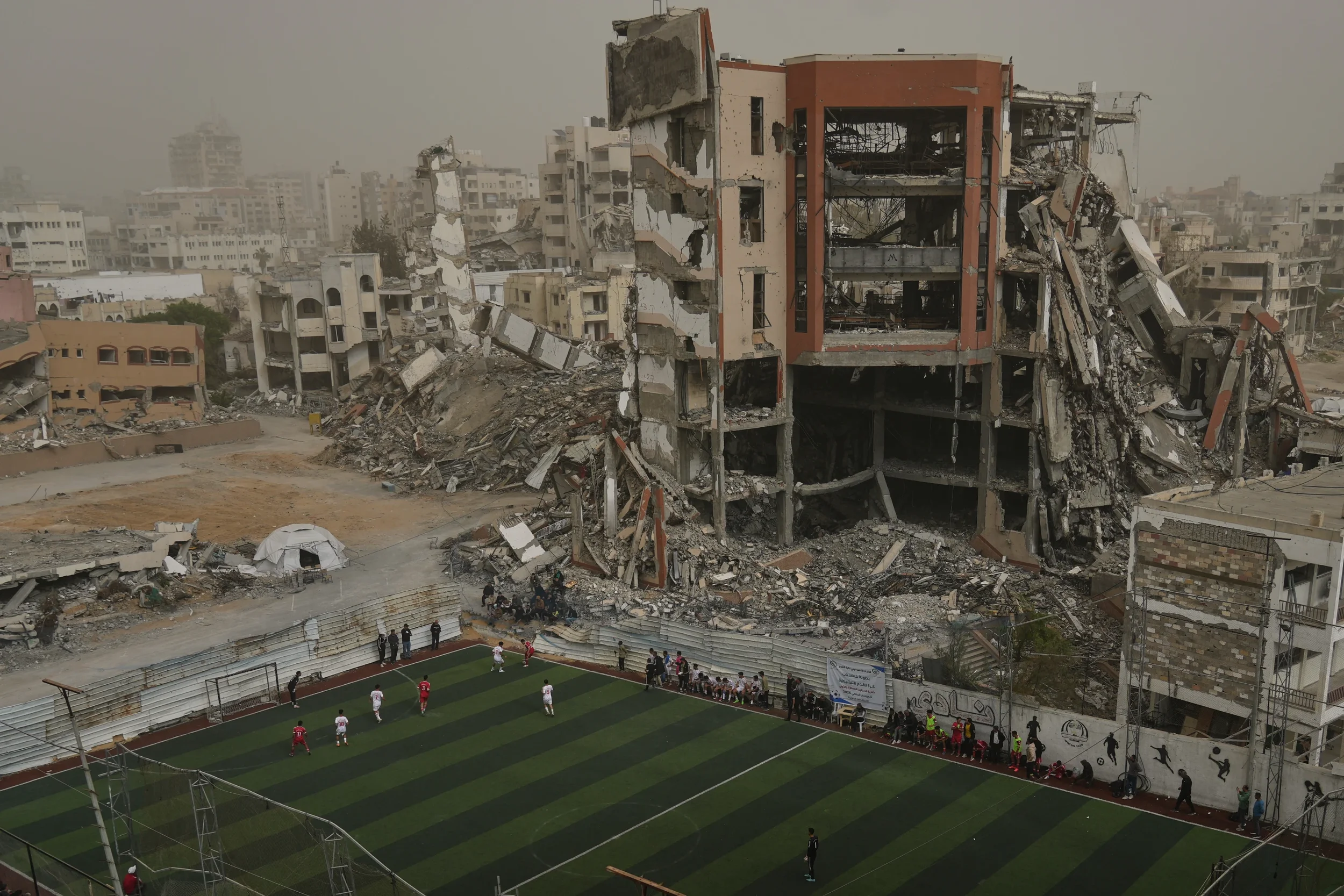
Palestinian players of Gaza Sports Club and Al-Ahly Club take part in a soccer match at a newly constructed field surrounded by buildings destroyed in Israeli ground and air operations, in Gaza City, Saturday, Feb. 14, 2026. Photo: Jehad Alshrafi / AP Photo
‘Tell sport, reveal the world.’
That is the slogan of this year’s Deauville Sport Images Festival in France.
It is a pretty good slogan for a photography festival. Sport does not happen in a vacuum. A football match can tell us about a community, a country, inequality, identity, war, peace, politics or simply what people do when everything around them has changed.
Sometimes, apparently, the world being revealed is a little too uncomfortable.
One of the photographs originally displayed at the festival was made by Palestinian Associated Press photographer Jehad Alshrafi. It shows players from Gaza Sports Club and Al-Ahly Club playing football on a newly constructed pitch in Gaza City in February 2026.
Behind them are the ruins of buildings destroyed in Israeli ground and air operations.
The photograph was part of an AP story about the return of football to Gaza. Gaza’s main football stadium had been destroyed and was being used as a camp for displaced families. Elsewhere, rubble had been cleared, old artificial turf put down and makeshift pitches created. Amputee footballers were training. Local teams were playing again.
People were doing what people tend to do: trying to reclaim some fragments of ordinary life.
It is a very good sports photograph.
It is also a photograph about Gaza.
Then it disappeared.
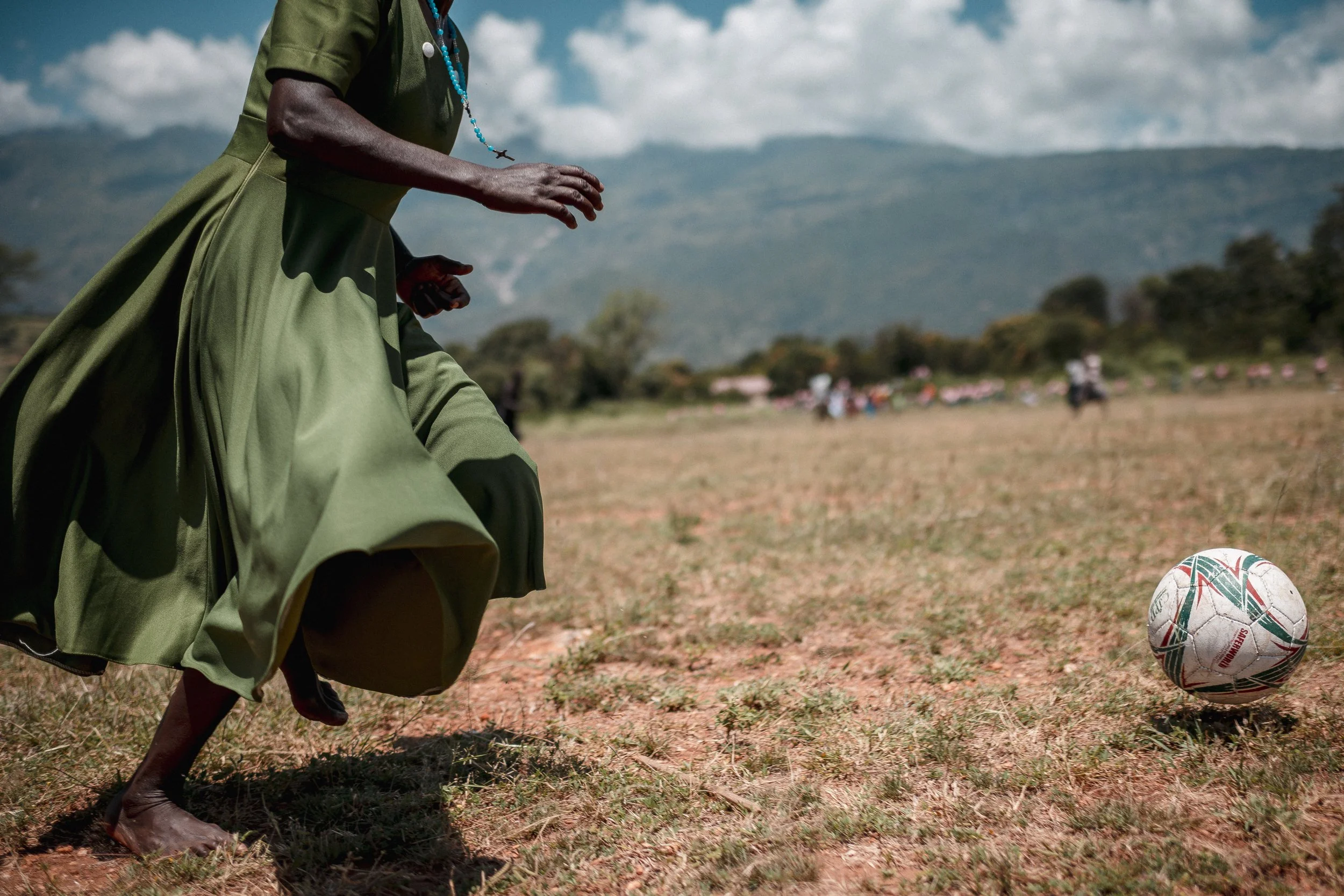
A women’s football group meets every week in Marakwet, Kenya, to train and build team spirit. Their next goal is a match against the women of neighbouring West Pokot — two regions with a long history of conflict over grazing land and cattle. Photo: Antti Yrjönen
After local journalists started asking questions, the organisers, through the municipality of Deauville, confirmed that the photograph had been replaced following requests they have not specified. Their explanation was that they did not want to become involved in controversy or, in their words, ‘pour ne heurter personne’ — to avoid upsetting anyone.
Well, that didn’t work.
But there is a more serious problem with the explanation.
‘Not upsetting anyone’ is an extraordinarily poor editorial principle for a photography festival.
Nobody appears to be disputing what Alshrafi photographed. The football match happened. The destroyed buildings were there. The photographer did not insert them into the background to make a political point.
They are simply part of the world in which the match was taking place.
The Deauville Sport Images Festival does not present itself as an exhibition of aesthetically pleasing pictures of athletes running very fast.
Its own programme says it wants to explore sport as a social, human, cultural and artistic phenomenon. It promises to place sport ‘at the heart of societal issues’ and celebrates photography not only for the beauty of sporting images, but for the stories they tell and the transformations in society they reveal.
The artistic director, Agnès Vergez, goes further.
Writing about this year’s programme, she explicitly describes sport as something shaped by political, ethnological and social contexts. She mentions gender controversies at the Olympics and restrictions imposed on Afghan sportswomen, before making the fairly obvious point that what happens in society is reflected, magnified and dramatised through sport.
Sport has always been political.
National teams compete under flags. Governments spend enormous sums hosting sporting events. Athletes protest. Athletes are prevented from protesting. Countries are excluded from competitions. Stadiums become sites of nationalism, dissent and propaganda. Race, gender, class, disability and inequality all become visible through sport.
The Deauville festival clearly understands this.
Among the photographs it chose to show this year is one of Ukrainian skeleton racer Vladyslav Heraskevych wearing a helmet bearing photographs of Ukrainian athletes killed since Russia’s invasion — a protest that led to him being barred from competing at the Milan-Cortina Winter Olympics.
The festival’s own caption explains the political context.
As it should.
The idea that sports photography somehow becomes improperly political when the world around the athlete enters the frame misunderstands what documentary photography is.
Alshrafi’s photograph matters because he did not crop the world out. The background changes our understanding of the foreground.
There is also something deeply misleading about presenting removal as neutrality.
Showing a photograph is an editorial decision. Removing one after complaints is editorial cowardice.
A removal does not become apolitical simply because it makes the controversy disappear from the exhibition wall.
In fact, ‘we don’t want to upset anyone’ sets a dangerous standard. If factual documentary photographs can be removed because somebody objects strongly enough to the reality they depict, then the question quickly becomes: who gets to be upset, and whose discomfort matters?
There will always be someone who would prefer certain photographs were not shown.
Politicians may dislike photographs of protests. Police officers may dislike photographs of police violence. Governments may dislike photographs showing the consequences of wars they wage or support.
That discomfort cannot, by itself, be the test.
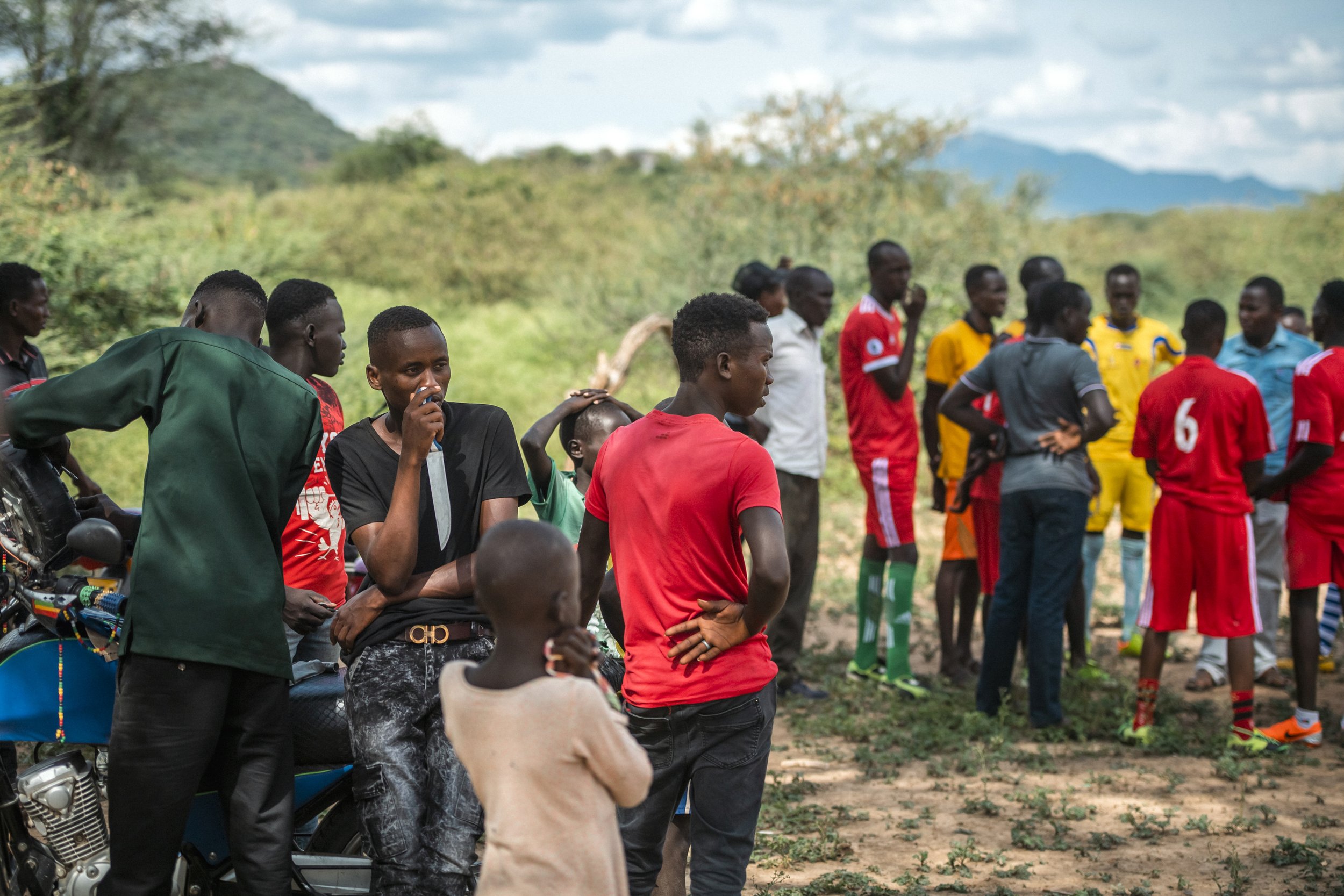
Young men from Marakwet have arrived to play a friendly match in Baringo, in Kenya’s Kerio Valley, where cattle rustling has driven a long cycle of violence. Football is one way of getting the two communities onto the same field. Photo: Antti Yrjönen
Photography festivals — particularly ones presenting photojournalism — should be places willing to show us things that are complicated, uncomfortable and contested.
Otherwise ‘reveal the world’ becomes a rather empty promise.
The irony is that Alshrafi’s photograph is almost a template for what Deauville says its festival is about.
It shows sport.
It shows ordinary people trying to continue ordinary life.
And it shows the society, history and politics surrounding that moment, because none of those things politely disappear when the referee blows the whistle.
A photographer’s job is not to crop the world out of sport.
If your slogan is ‘Tell sport, reveal the world,’ you have to be prepared for the world revealed to upset someone.