Classroom Below Ground at the Festival of Ethical Photography
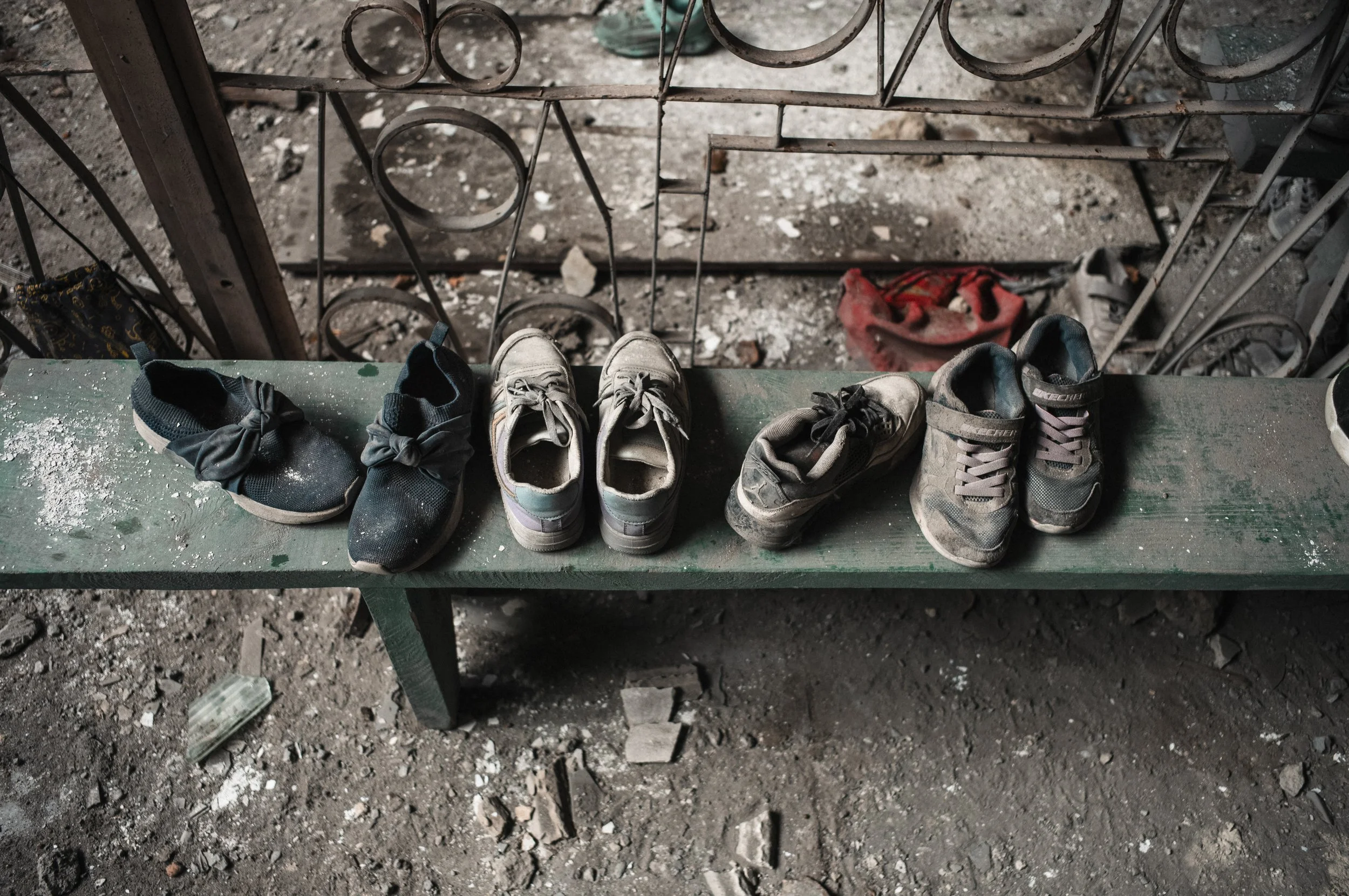
Children's shoes lie abandoned in the lobby of a school bombed on 8 April 2022. The school's pupils continue their education through distance learning or in the classrooms of a metro school.
For four years now, a large part of Ukrainian schooling has taken place in spaces reshaped by war: in classrooms built inside metro stations, in school basements fitted with desks and chalkboards, in temporary buildings beside damaged or destroyed schools, or at home over a laptop or a phone when the sirens have already sounded.
Classroom Below Ground is the series I have made about those spaces for Finn Church Aid since 2023. It has been selected for the Nonprofit World open call of the Festival of Ethical Photography in Lodi, where it will be exhibited from 26 September to 25 October.
The work
Finn Church Aid has worked on education in Ukraine since 2022 — repairing schools, building and equipping shelters, providing temporary learning spaces and psychosocial support, and more recently vocational training. My job has been to photograph that work, and the series grew out of it.
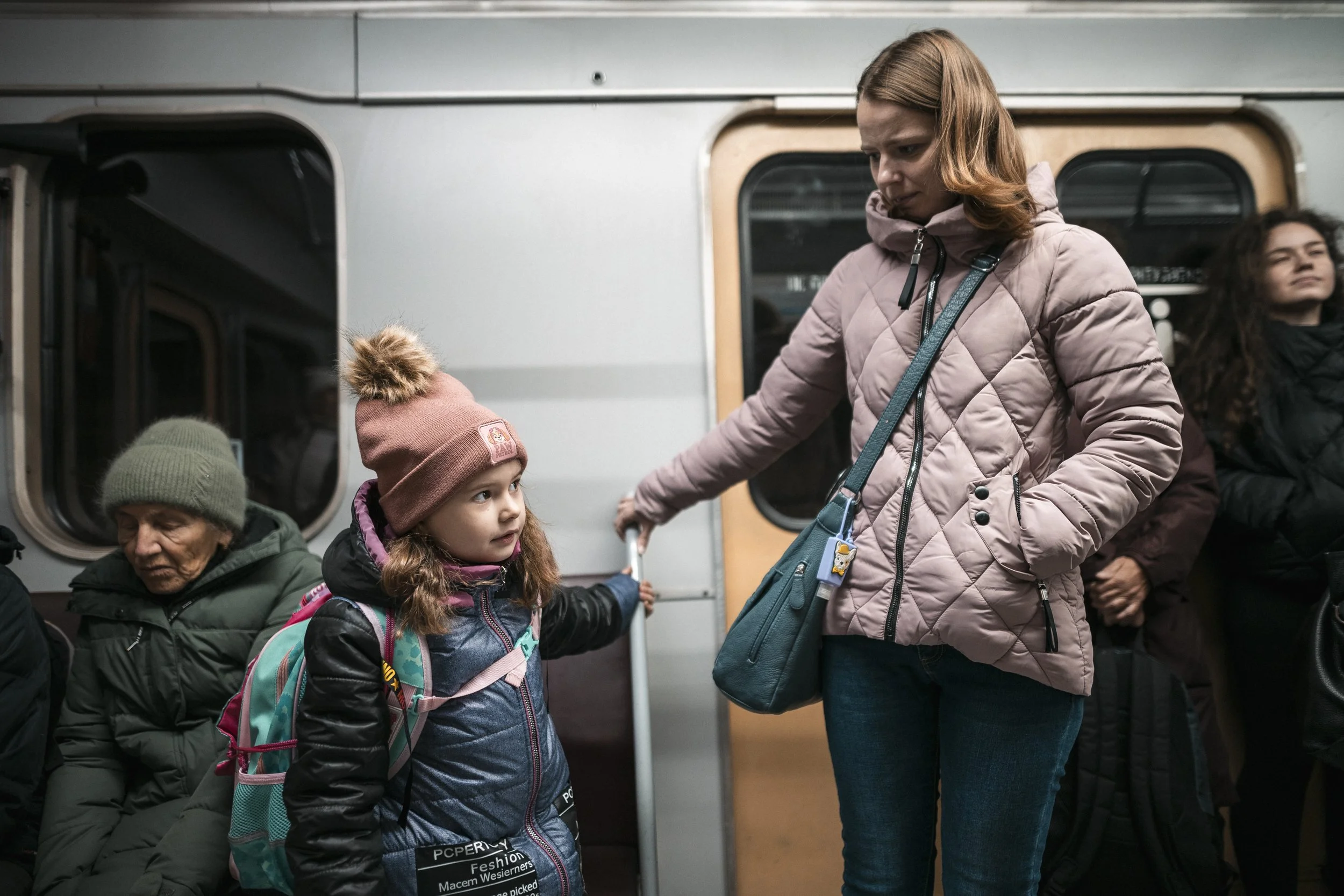
‘I’m happy that my child was able to go from the first grade to a classroom education,’ says mother Natalia Yurova, on her way home over the rumbling subway. ‘Because of the interaction, offline education is really important. It’s much more than what I could give her as a mother in a homeschool. My child is talkative and likes to be with other children. She's always eager to go to school.’
The most striking are the metro schools in Kharkiv. More than a hundred of the city’s schools have been damaged, some of them destroyed. In autumn 2023, classrooms were opened inside metro stations so that children could return to face-to-face teaching while the city remained under constant bombardment. By the time I photographed there, the metro school was running two shifts a day and had more than a thousand pupils.
You go down the stairs like anyone else. Trains stop and open their doors on schedule, and in a side hall six-year-olds get their books out. One mother told me she was simply glad her daughter had been able to start first grade in a room with a teacher rather than through a screen.
Then there are the shelters. Where schools have properly equipped shelters, lessons can continue underground during air-raid alerts. FCA has repaired or equipped them across the country, turning basements into spaces with desks, chalkboards and the things needed to carry on with the school day.
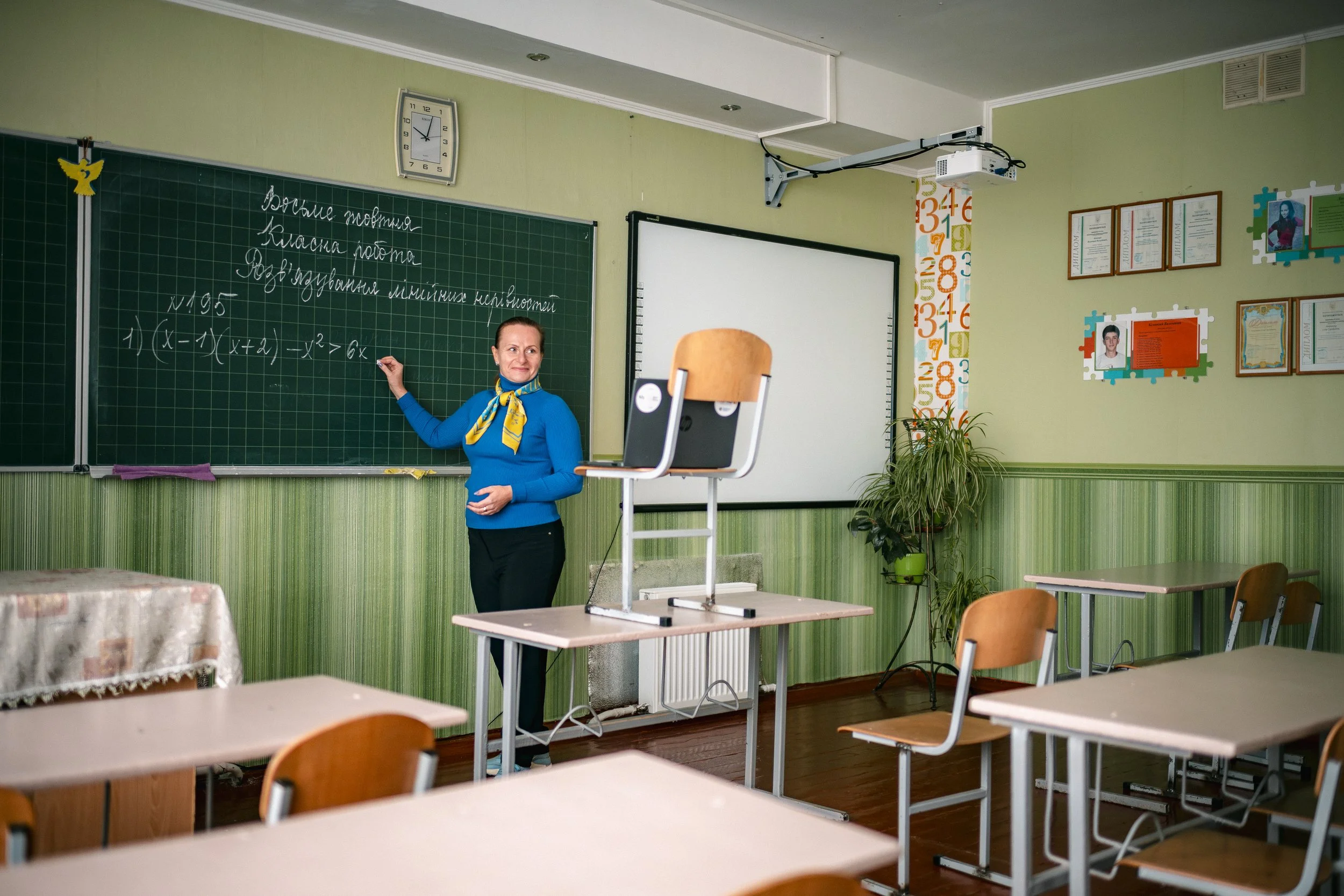
‘If we talk about this month, this is a completely normal day,’ says mathematics teacher Olena Loboda. Because of the morning’s air-raid alert she is teaching an empty classroom over a laptop.
At School No. 2 in Chernihiv, I met mathematics teacher Olena Loboda teaching her class remotely over a laptop. The shelter downstairs was empty because the alarm had sounded before the children could arrive.
The photograph I made that morning was named Finland’s News Photo of the Year 2025 and was also shortlisted in the Single Shot category of the festival’s World Report Award. I’ve written about the image and the story behind it here.
What the series is about, if it is about one thing, is the ordinariness that gets built around danger. Metro stations become schools. Basements become classrooms. And children learn what to do when the sirens sound. None of this is ordinary, but it has become part of an ordinary school day.
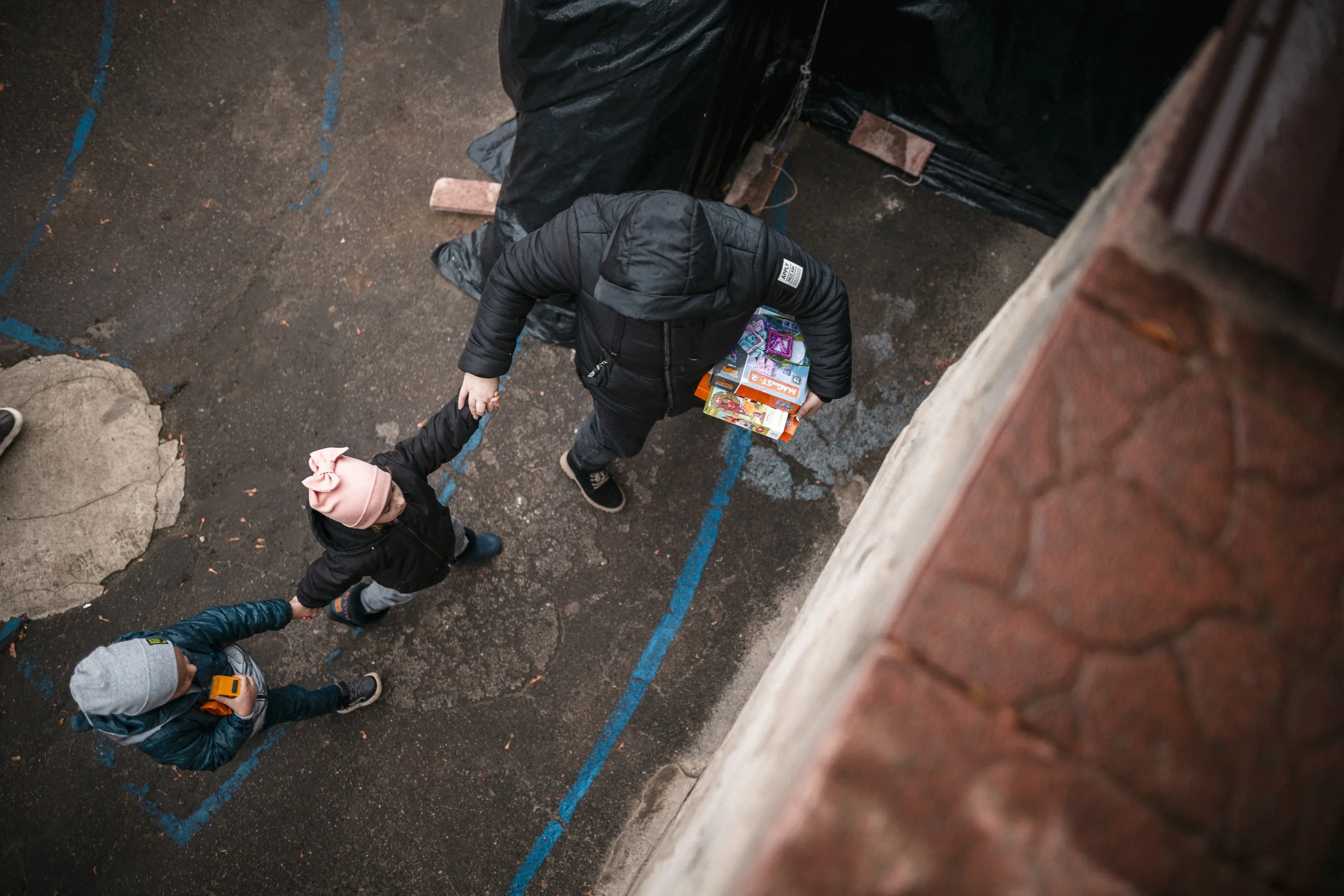
Children moving to their kindergarten’s bomb shelter during an air raid alert in the city of Romny, Ukraine. A functioning bomb shelter is a requirement for attending kindergarten and for in-person teaching in schools.
The festival
The Festival of Ethical Photography is now in its seventeenth edition. Since its beginning, it has given particular attention to photography made by organisations working on social issues, and its Nonprofit World section is specifically dedicated to photographic work commissioned by nonprofit organisations.
That makes it a particularly fitting context for this series.
Classroom Below Ground exists because I was photographing an aid organisation’s response to the war. But the photographs are also a record of something larger: what happens when an emergency lasts long enough for people to have to build everyday life around it.
There is an unavoidable tension in photographing this kind of work. The images have a job to do for the organisation that commissioned them, but the people in them are not illustrations of a programme. They have lives that extend far beyond the reason I was sent there with a camera.
That is one reason I am glad the series will be shown in Lodi: in a festival that makes the relationship between photography, ethics and nonprofit work part of the conversation, rather than treating it as something outside the frame.
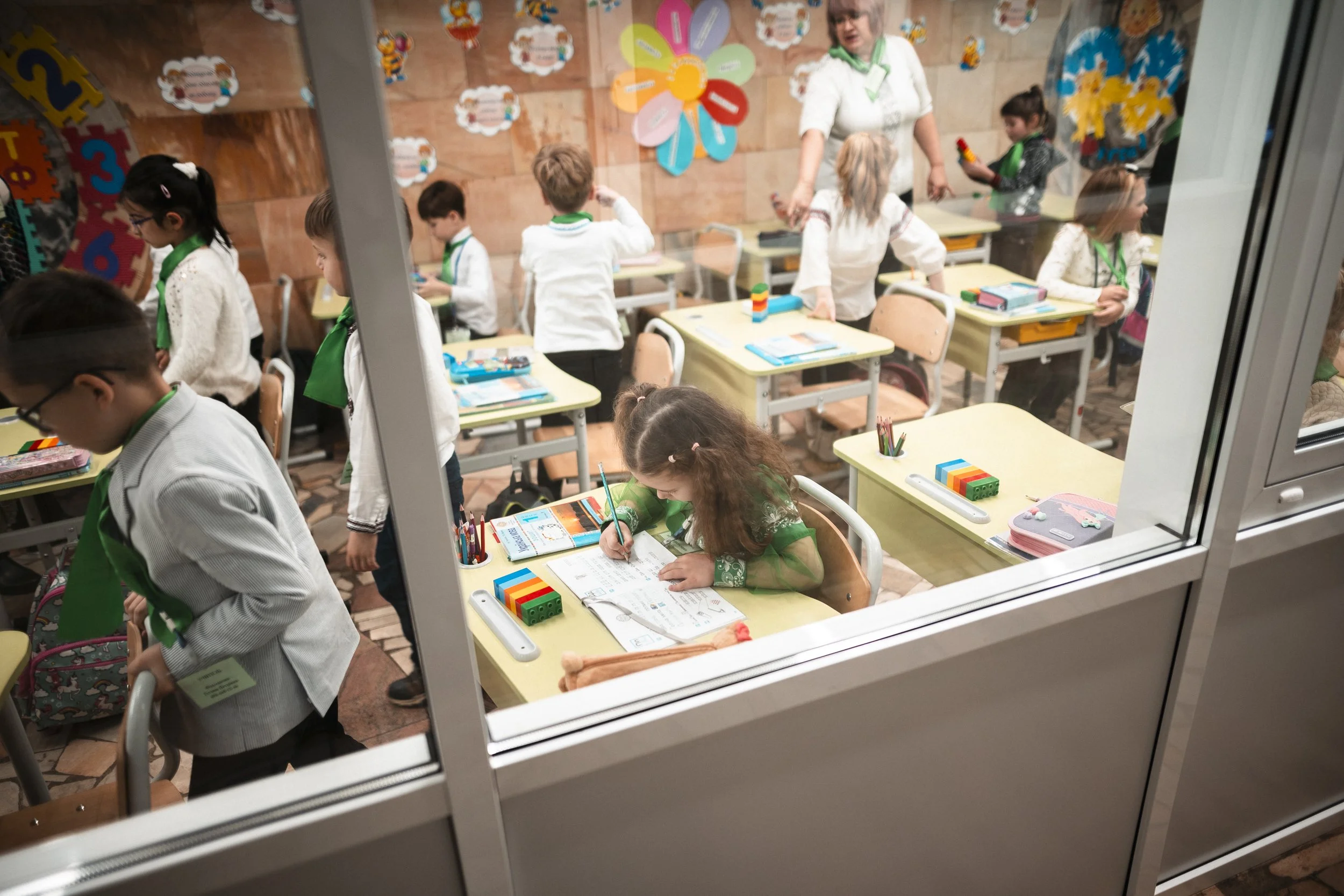
Yuliya Yurova, aged 6, holds a pencil firmly in her hand and copies the curvy letters in the exercise book. Occasionally she lets out a frustrated sigh, digs a rubber from the box and wipes it all away. Learning the letters seems to be an exacting job.