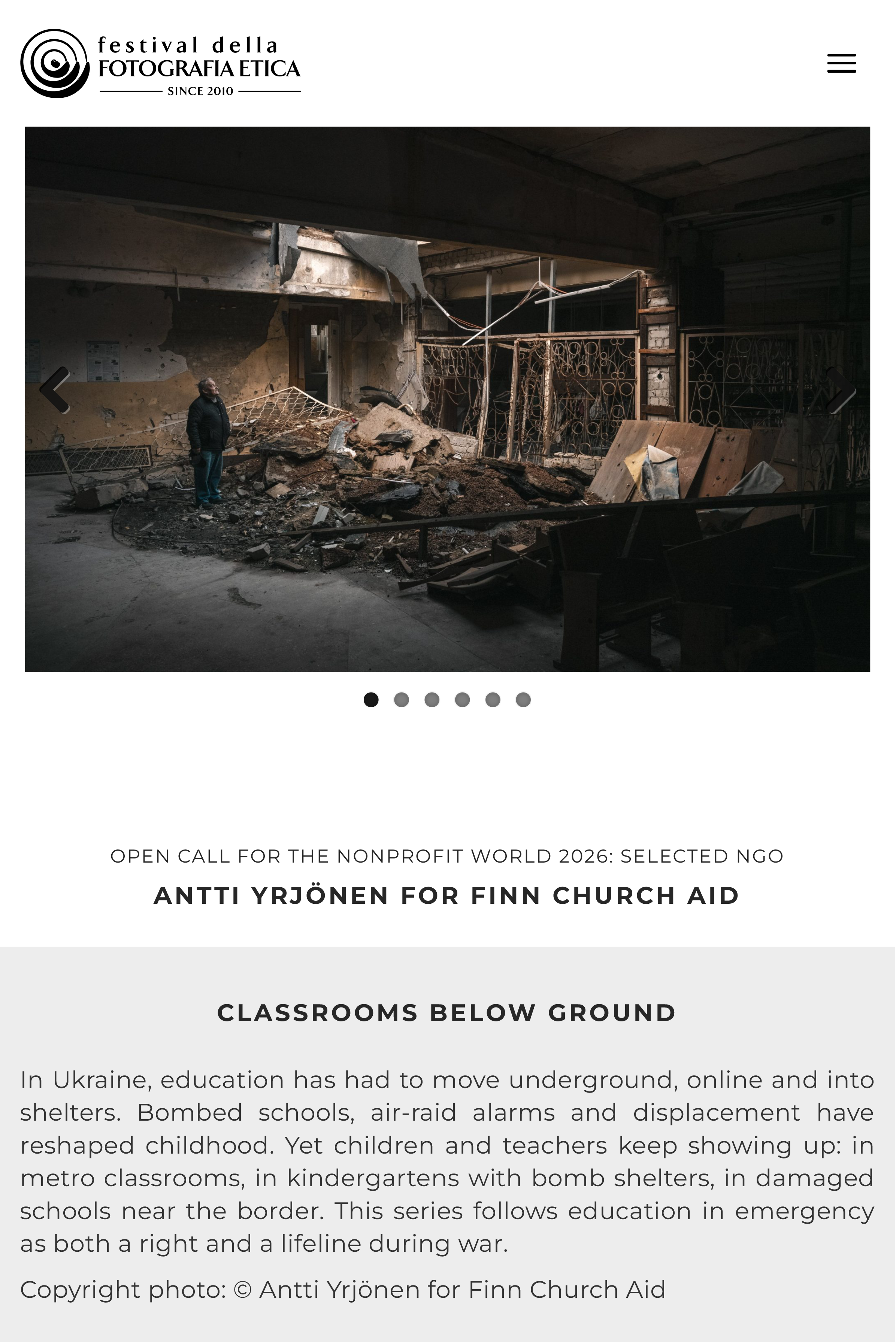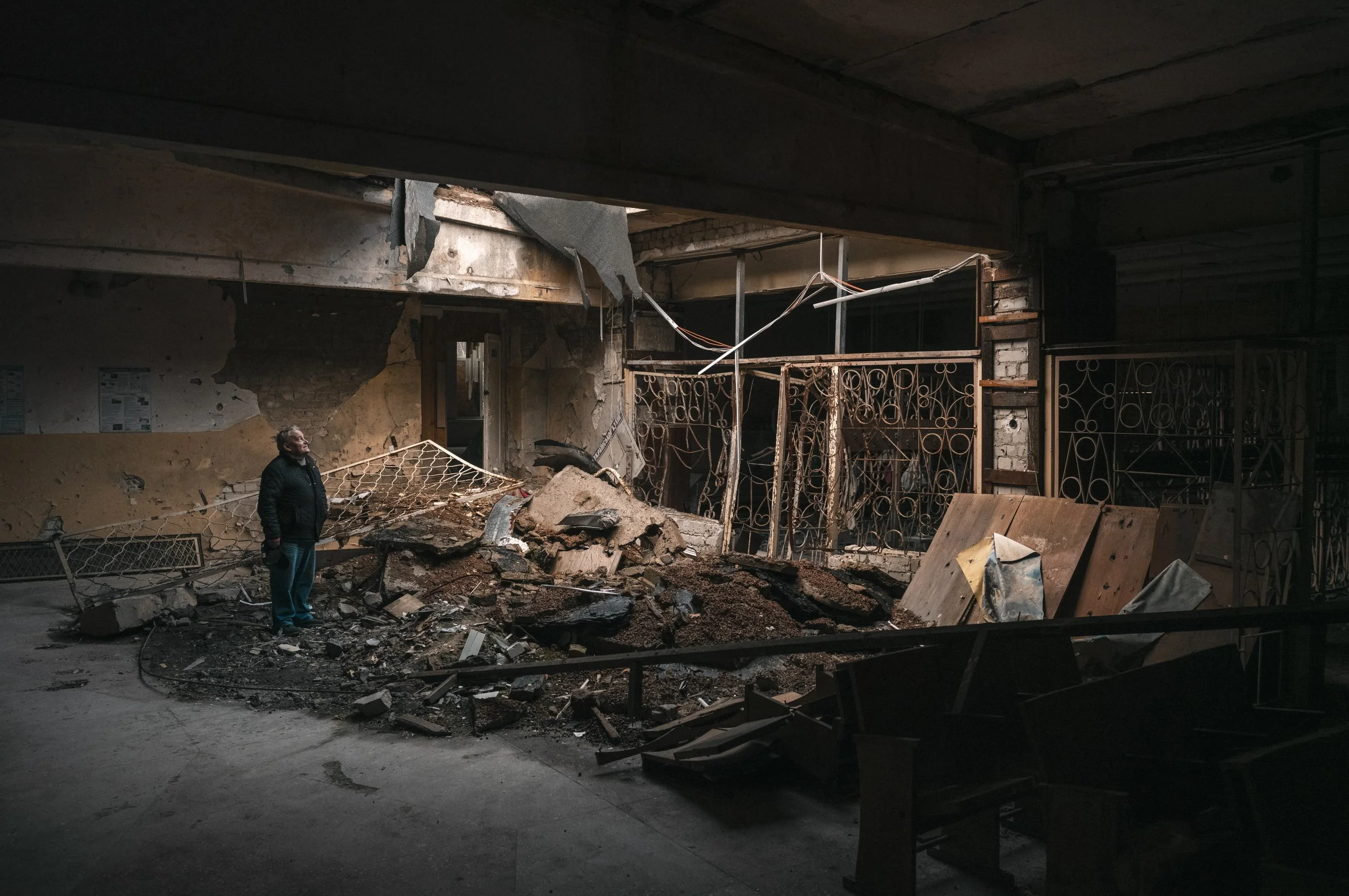
Oleksander Grianyk, principal of Kharkiv School Number 62, stands in the damaged lobby, recounting the night of April 8, 2022, when the school in Piatyhatky was heavily bombed. The school sustained significant damage, most notably in the Russian language classroom which was completely destroyed. Following the destruction, the school’s 1,000 pupils have transitioned to remote learning.
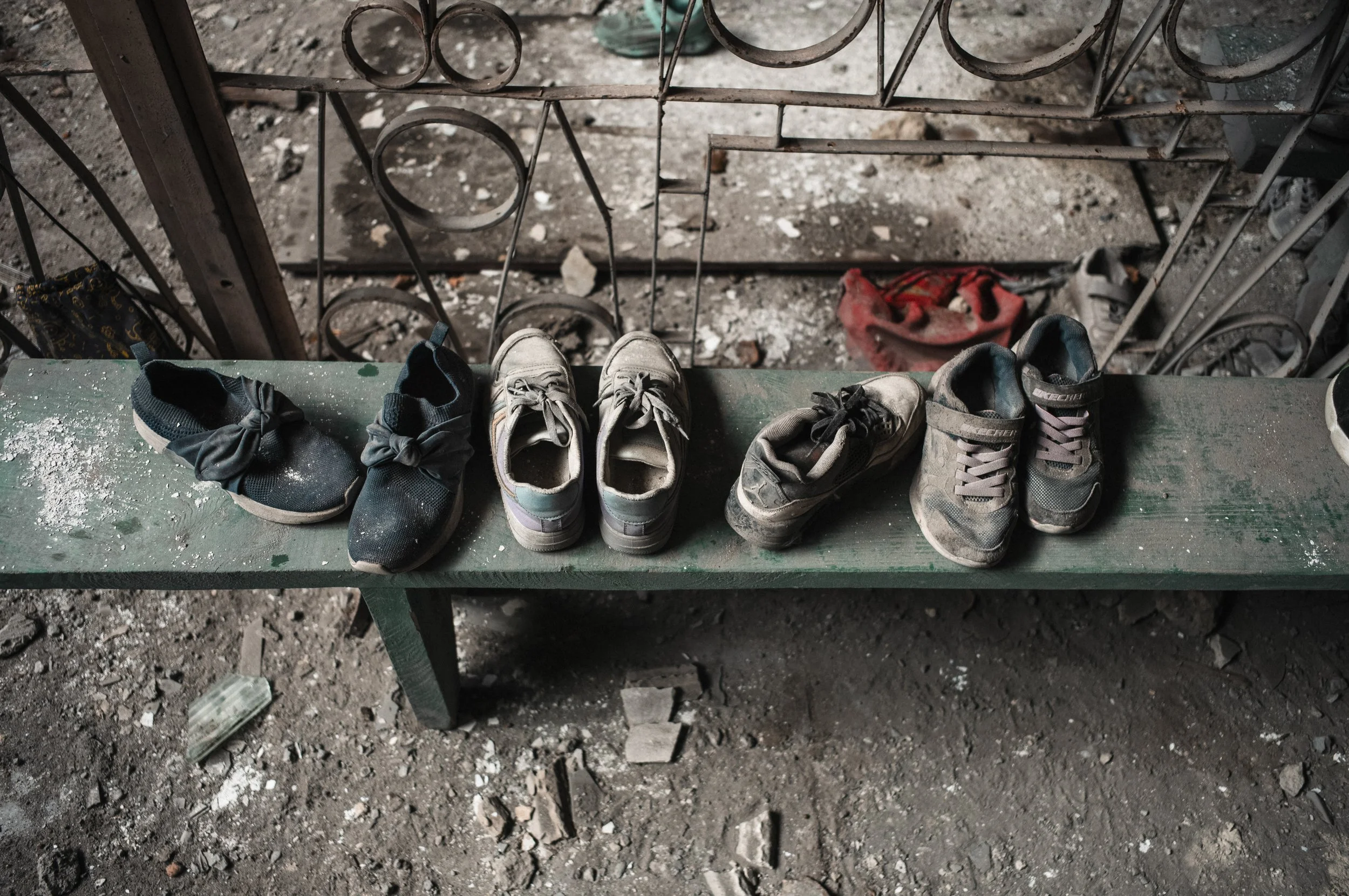
Children’s shoes lie abandoned in the lobby of a school bombed on 8 April 2022. The school's pupils continue their education through distance learning or in the classrooms of a metro school.
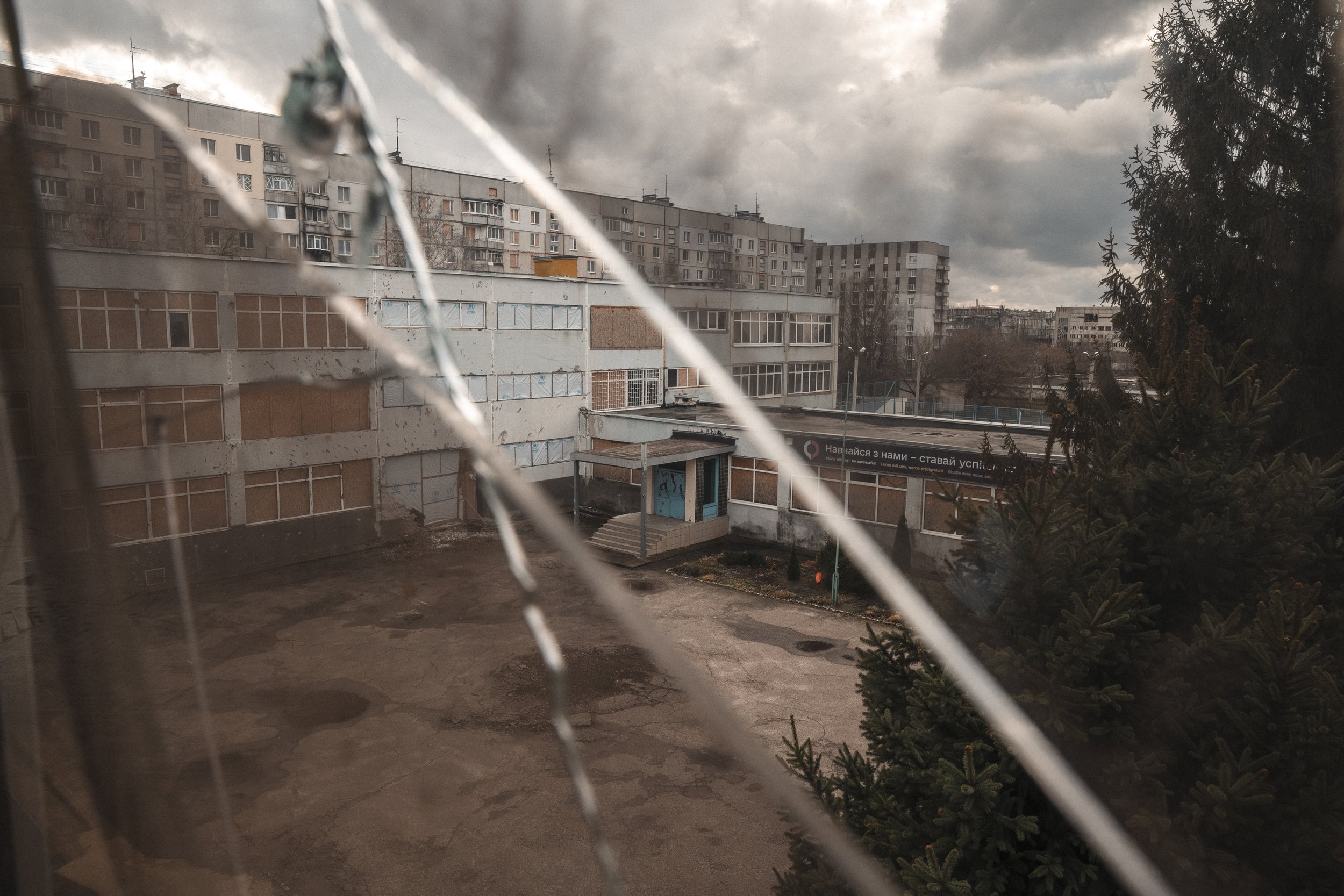
School No 158 in Kharkiv, scarred by the conflict, has stood damaged since March 2022. The city, situated just 30 kilometres from the Russian border, has seen its inhabitants bear witness to intense attacks throughout 2022 and beyond.
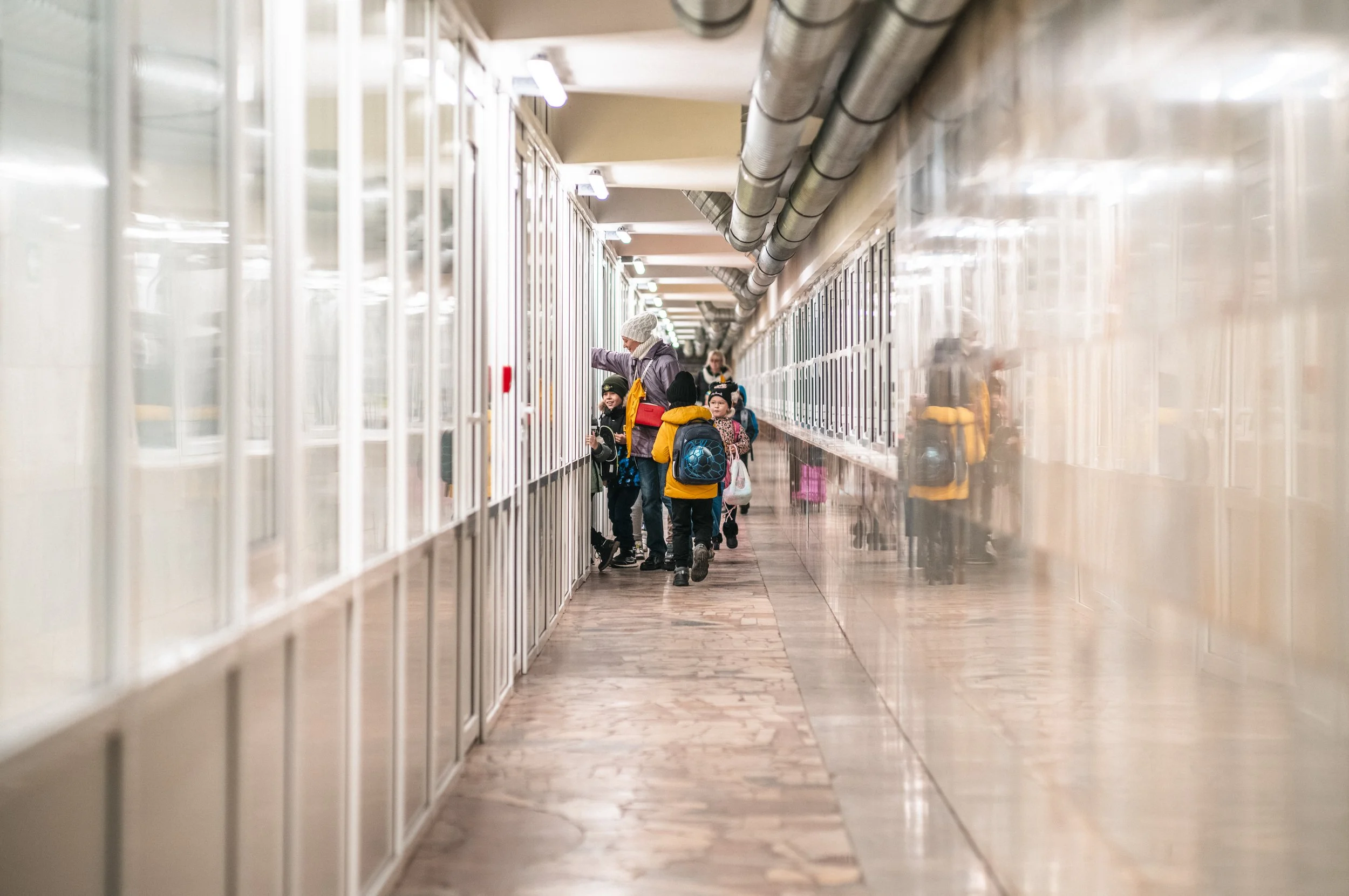
Kharkiv’s metro network was completed in 1975 to meet the needs of the growing city of one million people. In recent years, up to 240 million passengers have travelled through its tunnels every year. In autumn 2023, schools were set up at five metro stations.
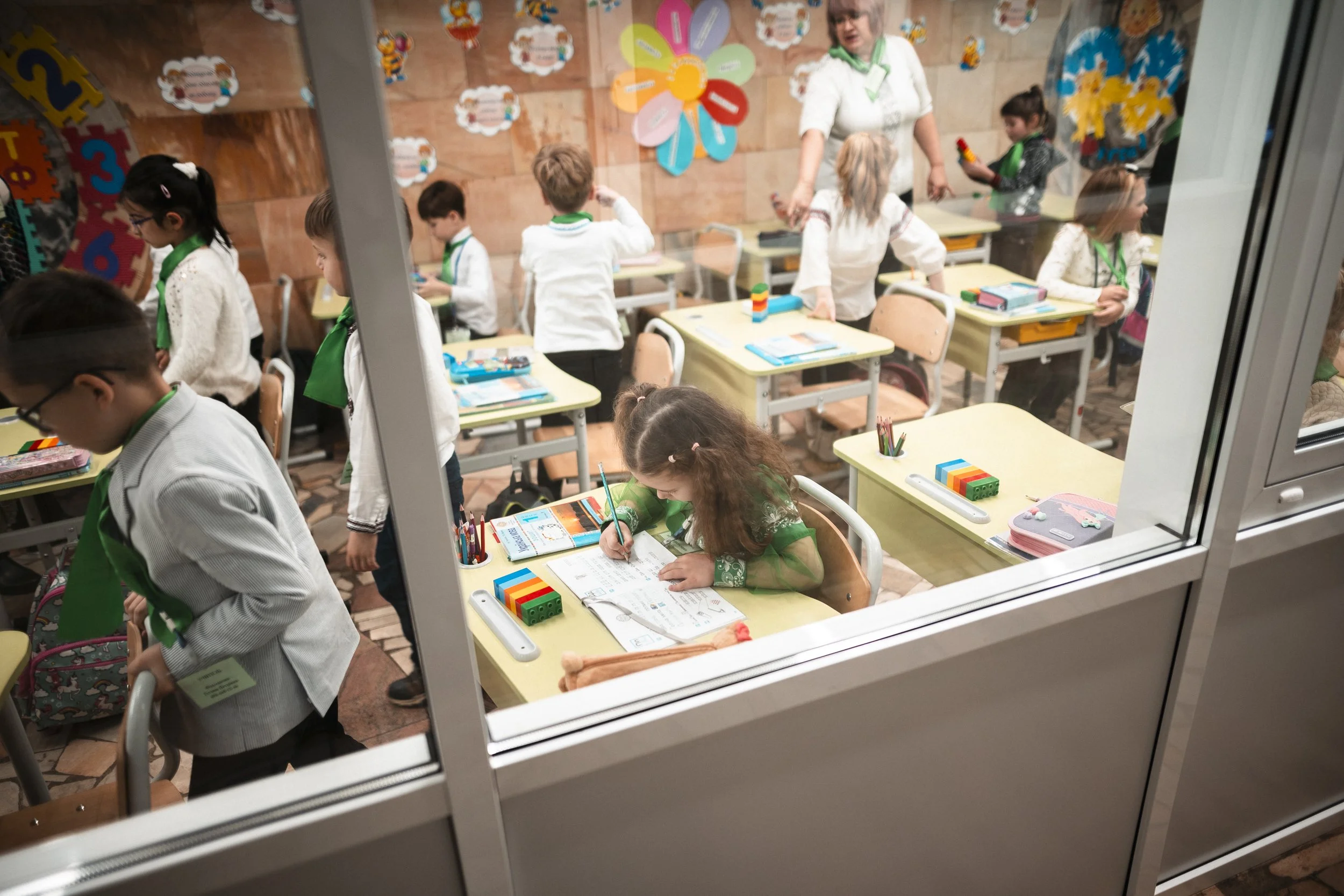
Yuliia Yurova, aged 6, holds a pencil firmly in her hand and copies the curvy letters in the exercise book. Occasionally she lets out a frustrated sigh, digs a rubber from the box and wipes it all away. Learning the letters seems to be an exacting job.
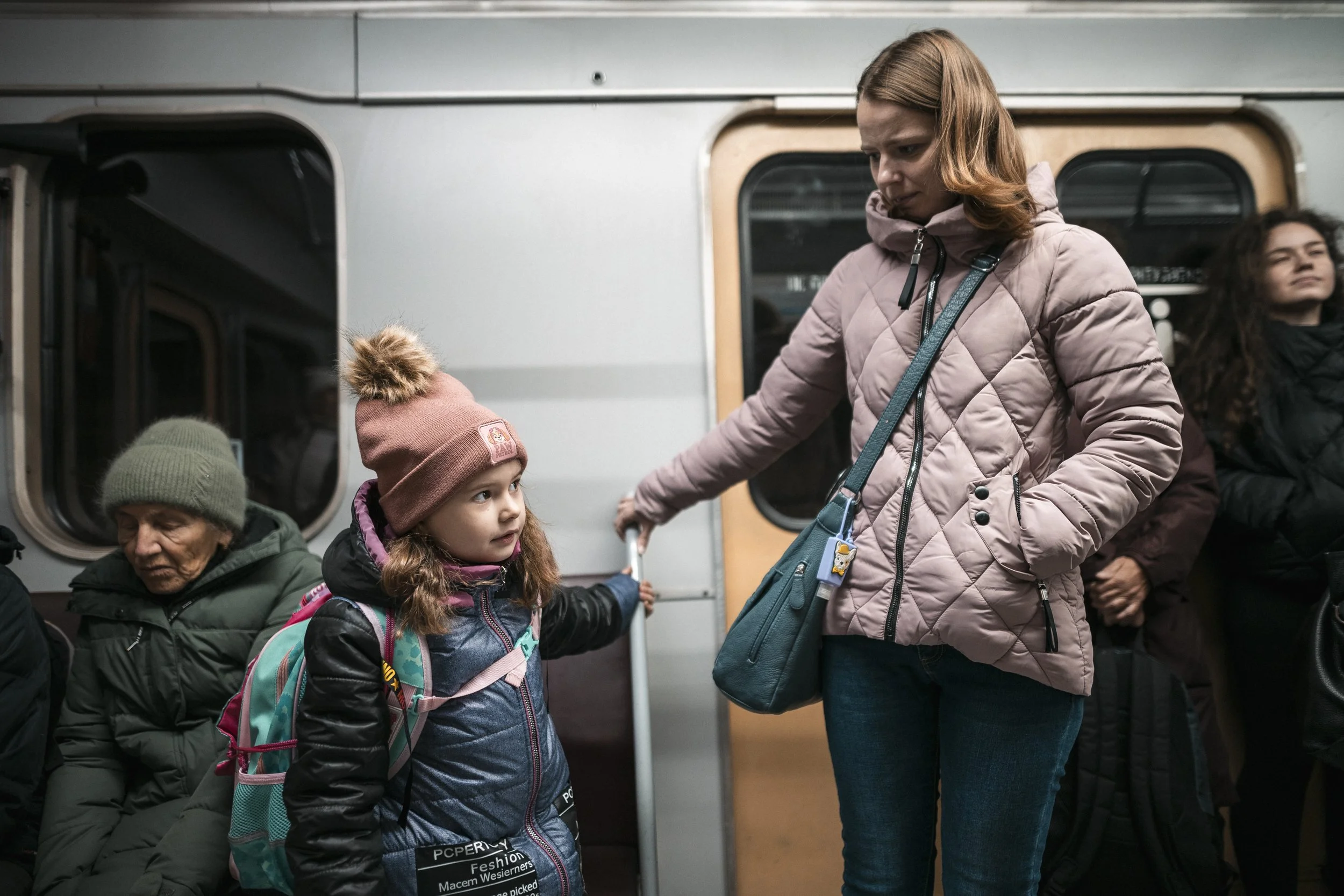
‘I’m happy that my child was able to go from the first grade to a classroom education,’ says mother Natalia Yurova, on her way home over the rumbling subway. ‘Because of the interaction, offline education is really important. It's much more than what I could give her as a mother in a homeschool. My child is talkative and likes to be with other children. She's always eager to go to school.’
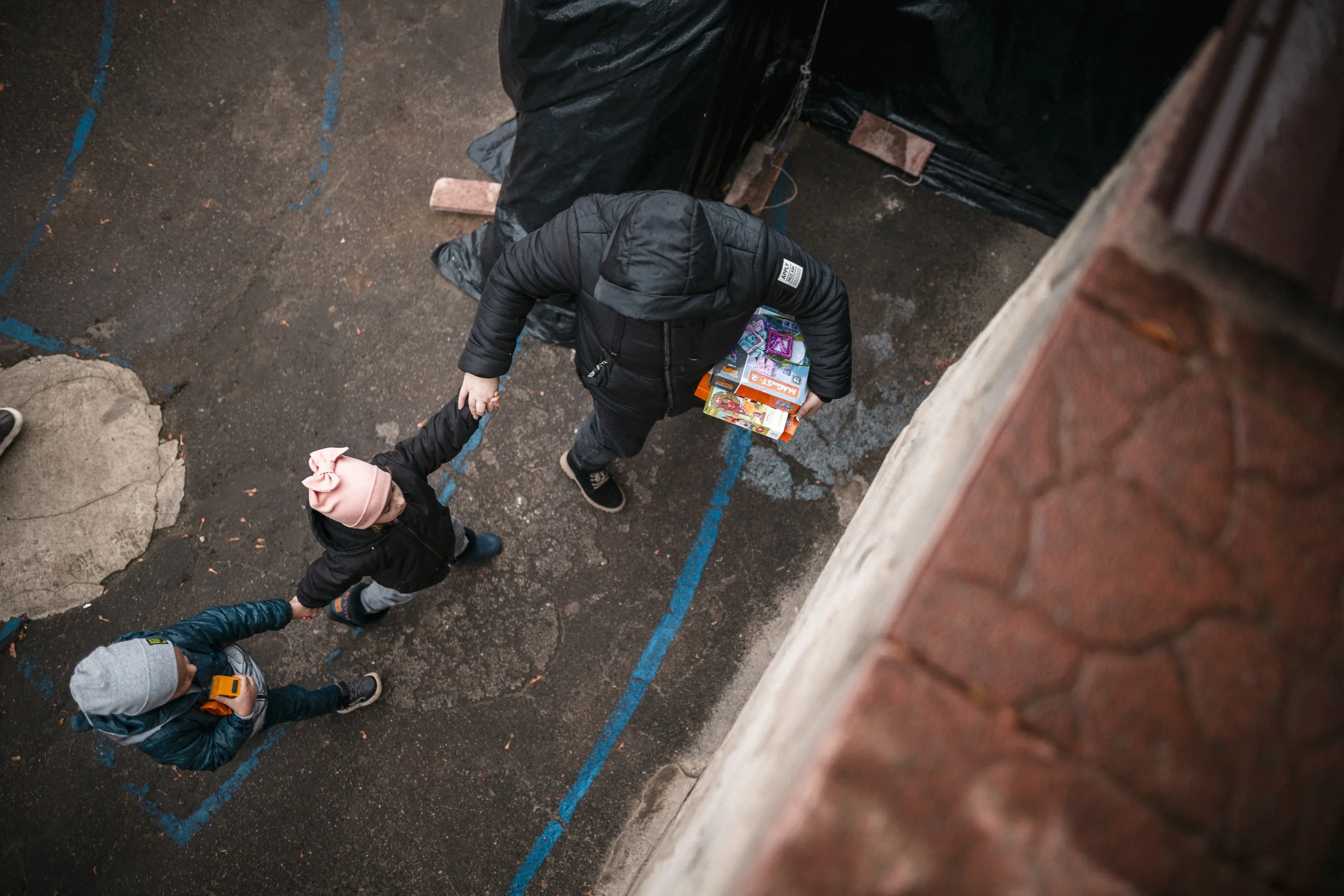
Children moving to their kindergarten’s bomb shelter during an air raid alert in the city of Romny, Ukraine. A functioning bomb shelter is a requirement for attending kindergarten and for in-person teaching in schools.
Oleksander Grianyk, principal of Kharkiv School Number 62, stands in the damaged lobby, recounting the night of April 8, 2022, when the school in Piatyhatky was heavily bombed. The school sustained significant damage, most notably in the Russian language classroom which was completely destroyed. Following the destruction, the school’s 1,000 pupils have transitioned to remote learning.
Children's shoes lie abandoned in the lobby of a school bombed on 8 April 2022. The school's pupils continue their education through distance learning or in the classrooms of a metro school.
School No 158 in Kharkiv, scarred by the conflict, has stood damaged since March 2022. The city, situated just 30 kilometres from the Russian border, has seen its inhabitants bear witness to intense attacks throughout 2022 and beyond.
Kharkiv’s metro network was completed in 1975 to meet the needs of the growing city of one million people. In recent years, up to 240 million passengers have travelled through its tunnels every year. In autumn 2023, schools were set up at five metro stations.
Yuliia Yurova, aged 6, holds a pencil firmly in her hand and copies the curvy letters in the exercise book. Occasionally she lets out a frustrated sigh, digs a rubber from the box and wipes it all away. Learning the letters seems to be an exacting job.
‘I’m happy that my child was able to go from the first grade to a classroom education,’ says mother Natalia Yurova, on her way home over the rumbling subway. ‘Because of the interaction, offline education is really important. It's much more than what I could give her as a mother in a homeschool. My child is talkative and likes to be with other children. She's always eager to go to school.’
Children moving to their kindergarten’s bomb shelter during an air raid alert in the city of Romny, Ukraine. A functioning bomb shelter is a requirement for attending kindergarten and for in-person teaching in schools.
Classrooms below ground
2023–2024, Tekoja Magazine
In Ukraine, education has had to move underground, online and into shelters. Bombed schools, air-raid alarms and displacement have reshaped childhood. Yet children and teachers keep showing up: in metro school classrooms, in kindergartens with bomb shelters, in damaged schools near the border. This series follows education in emergency as both a right and a lifeline during war.
Classrooms below ground was selected for the Festival of Ethical Photography’s Open Call for the Nonprofit World, a programme highlighting documentary work made with or for nonprofit organisations. A single image from the series was also shortlisted in the Single Shot category.