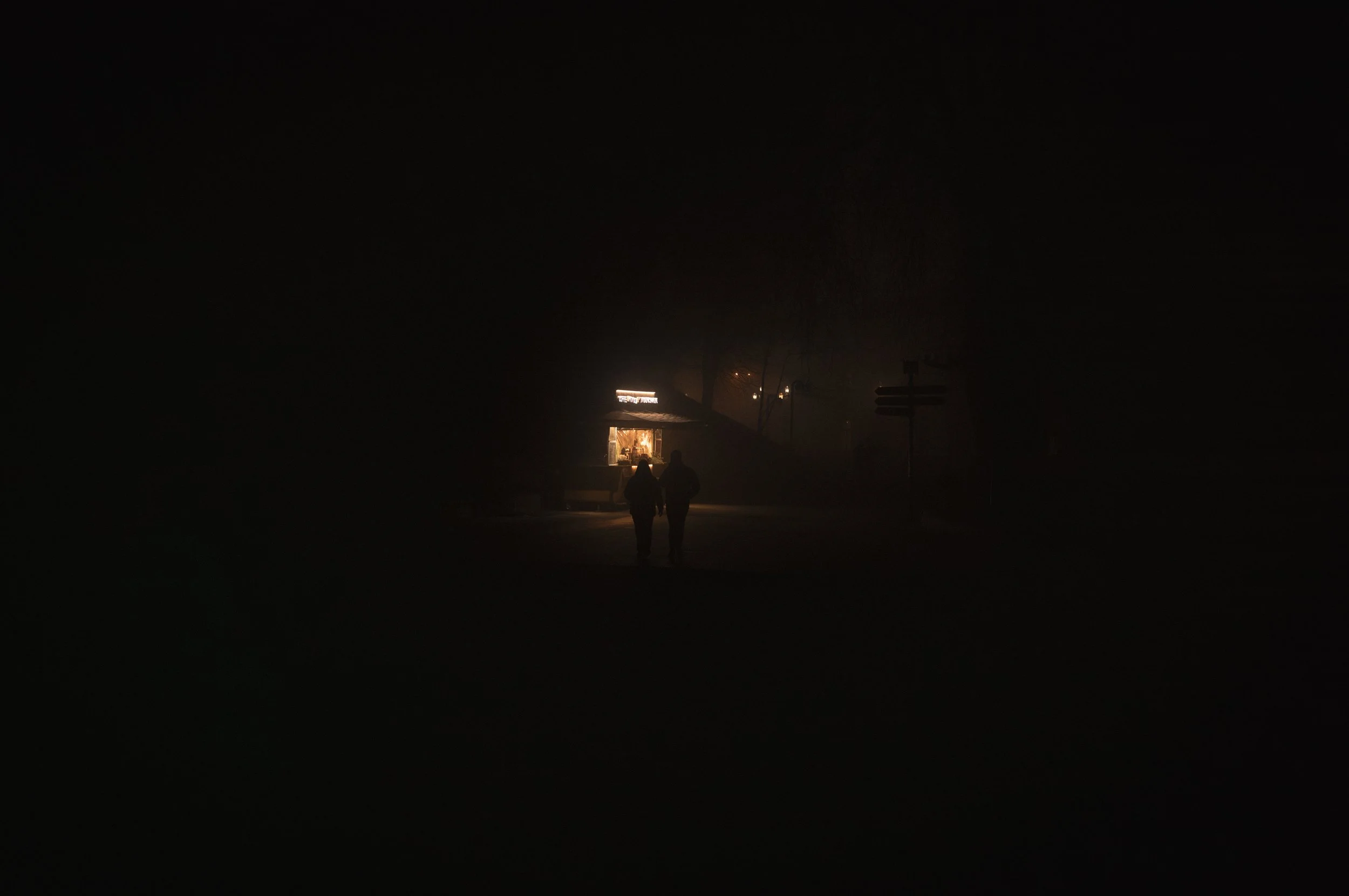
A generator-powered kiosk in central Kyiv waits for customers. Repeated Russian missile and drone attacks on Ukraine’s energy infrastructure have forced residents and businesses to rely on diesel generators, with electricity available only for a few hours each day.
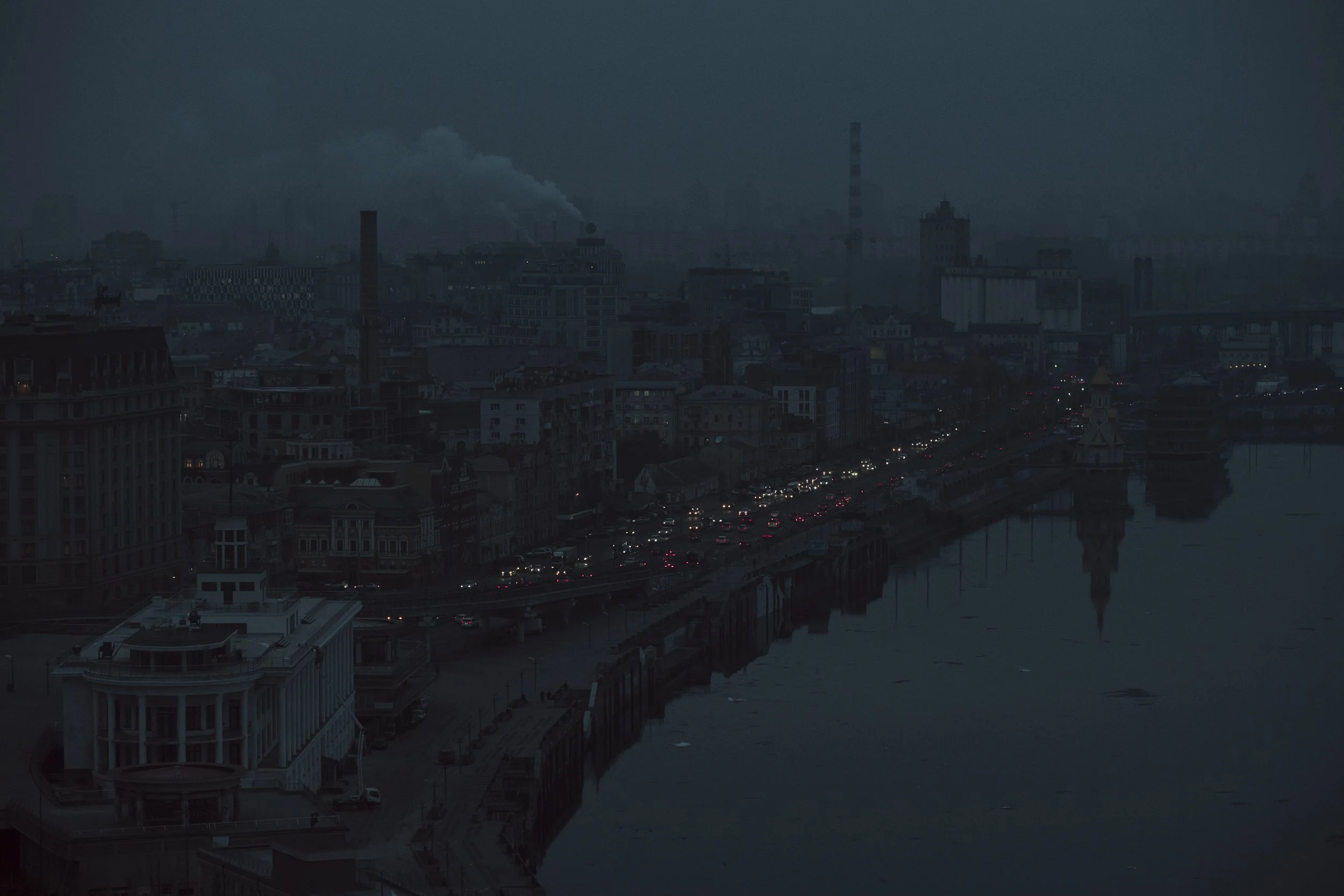
On January 27, 2023, darkness shrouds Kyiv, home to three million people. Just the day before, Russia fired 55 missiles, with Ukraine successfully intercepting 47 of them. These attacks led to at least 11 fatalities and plunged the capital into days of power outages.
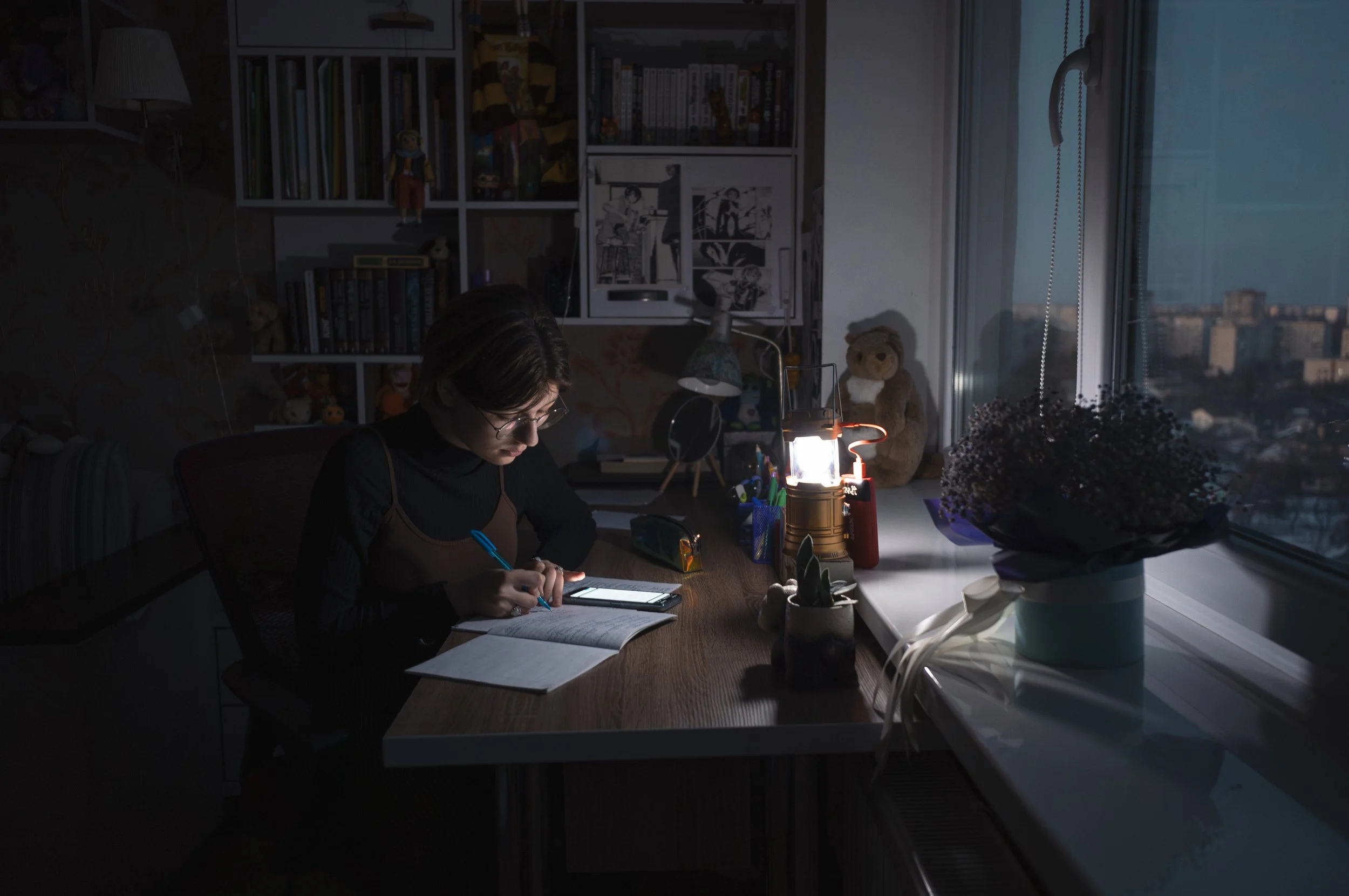
Fifteen-year-old Karina Bykova, residing in a high-rise in Chernihiv, Northern Ukraine, faces daily power outages, leading to darkness and cold at home, with the water supply often cut off. ‘After school, I have about three hours to do my homework before it gets dark, and then I just sleep.’
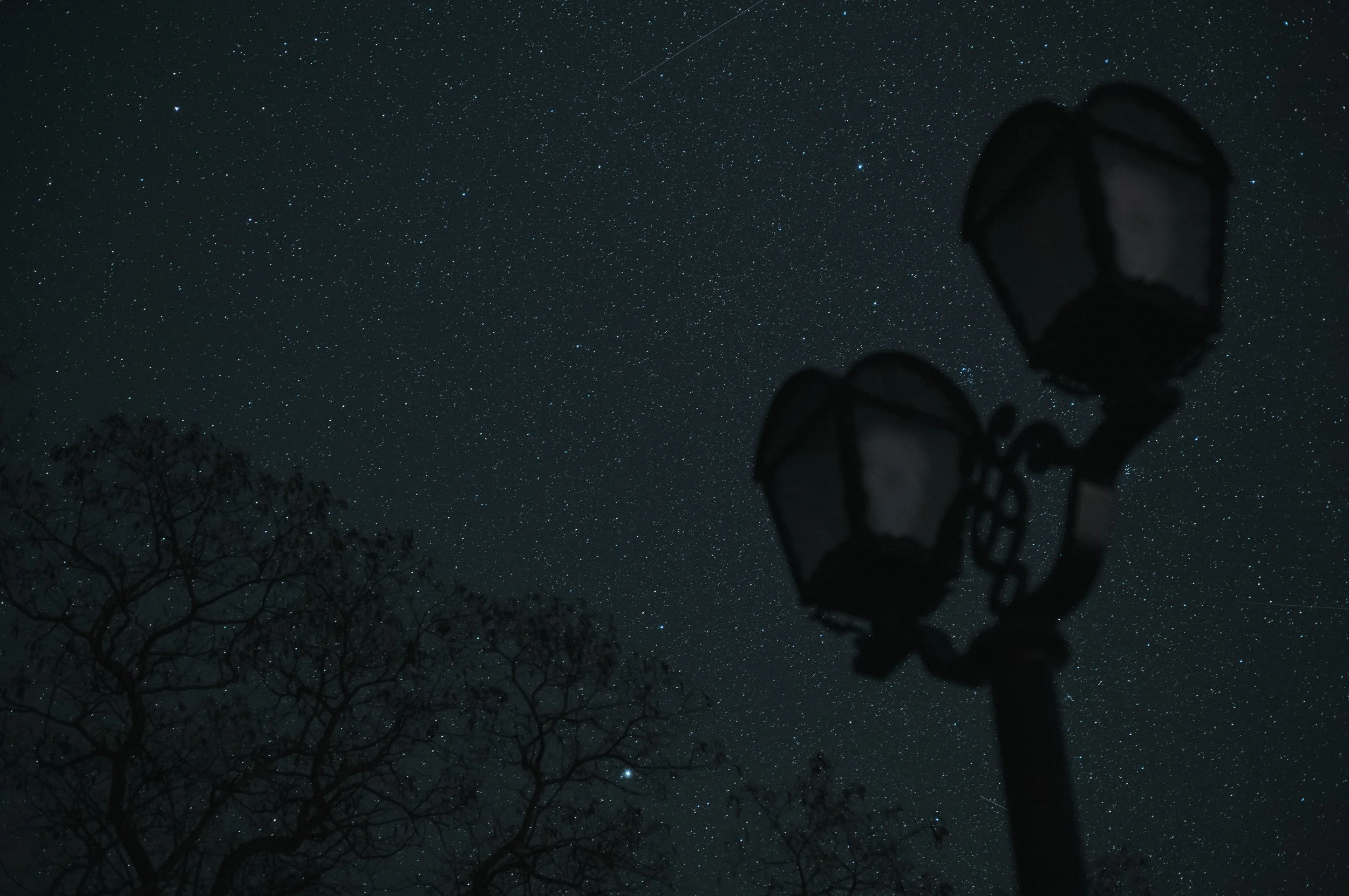
On a crisp February 2023 night, only stars guide evening walkers in Dytynets Park, one of Chernihiv’s oldest areas, favoured for leisure and dog walking. For those venturing out, wearing a headlamp is advisable.
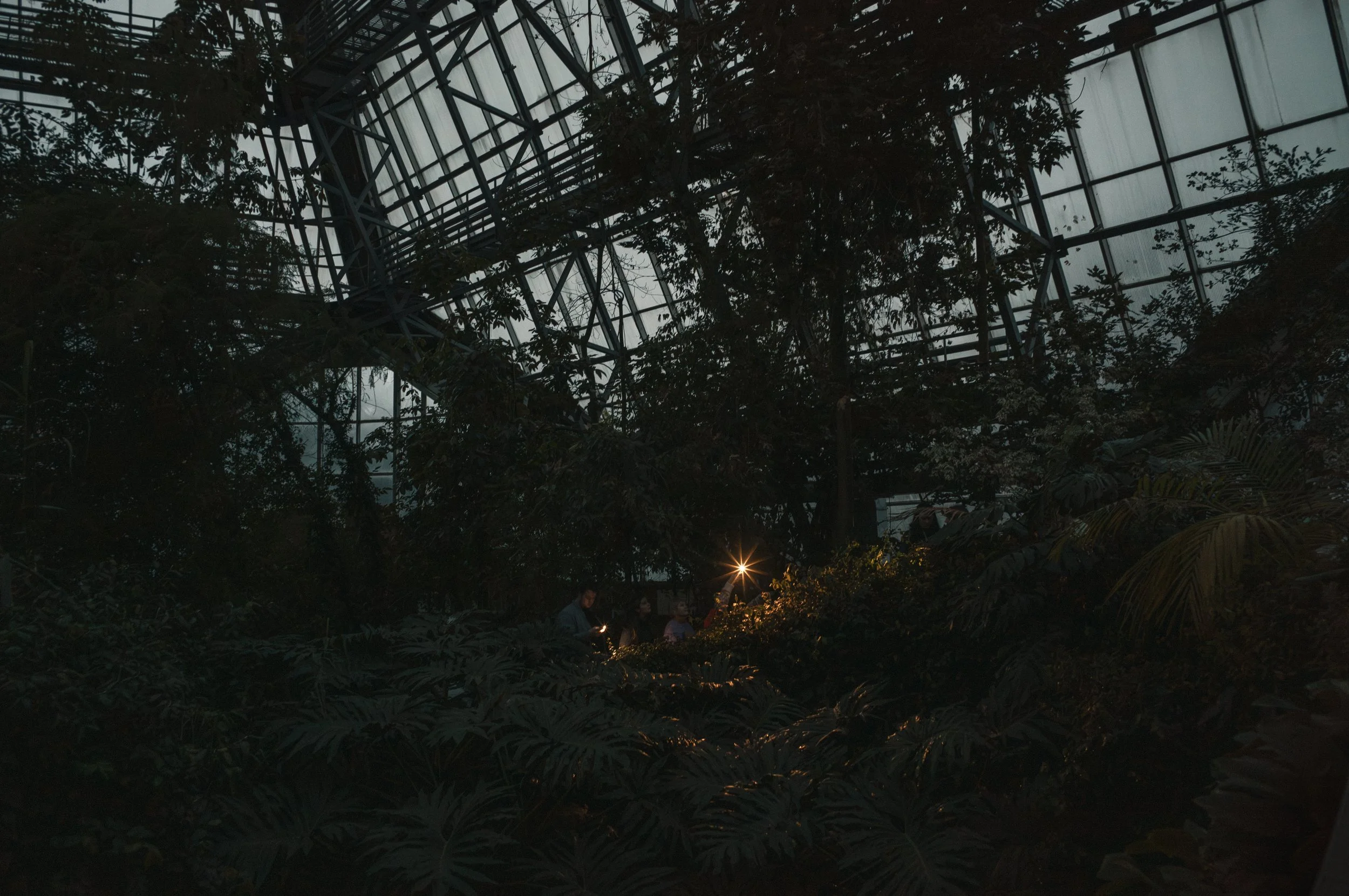
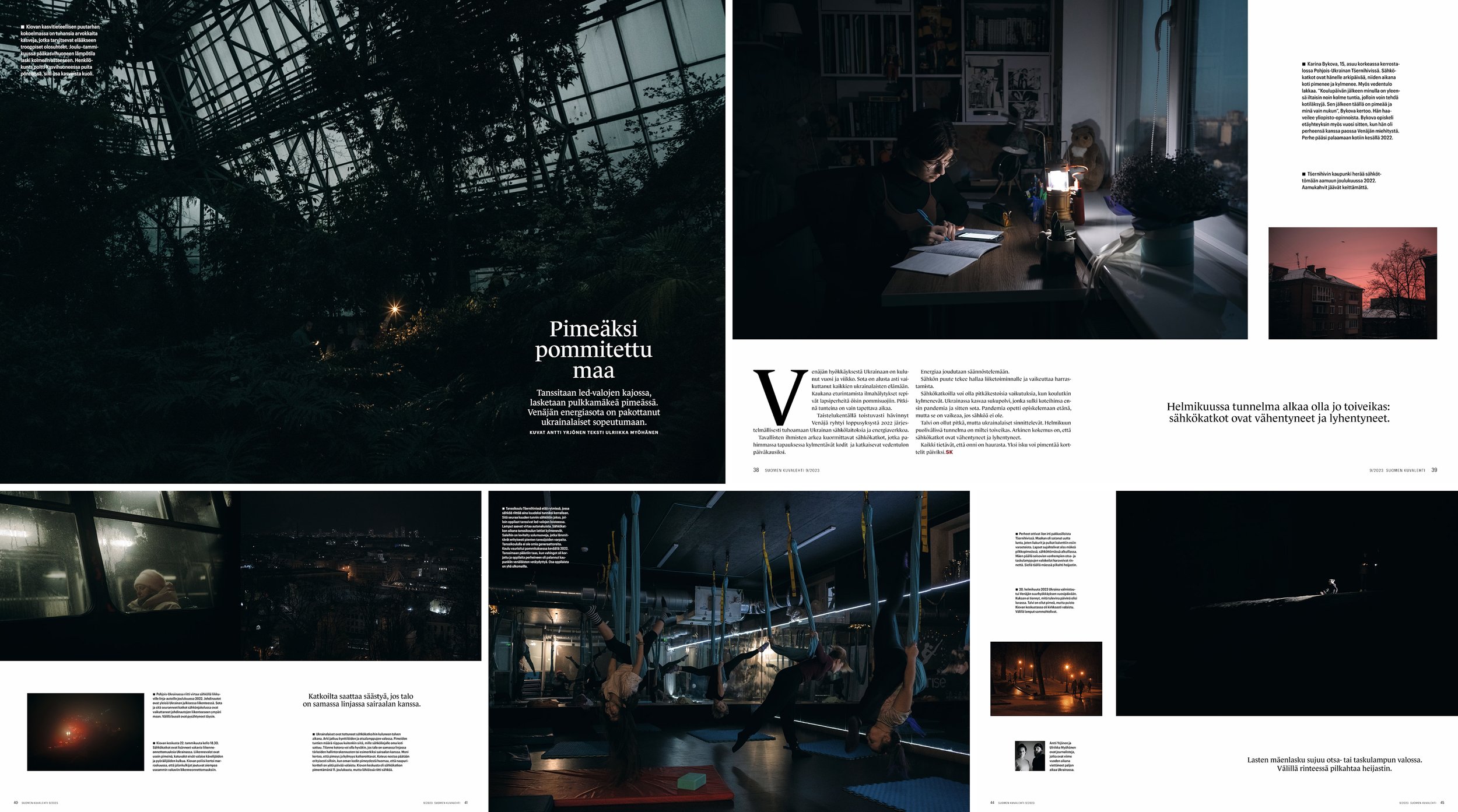
The war and resultant power outages impact all life forms, as seen in Kyiv’s botanical garden. Home to a decades-old collection of thousands of plants needing tropical conditions, the garden faces a critical challenge. Lead researcher Roman Ivannikov, with 26 years of service, has maintained the plants throughout the difficult war year.

‘We experienced severe hardships when Russia attacked Kyiv’, Ivannikov says. ‘If we had left, the plants would have perished.’ He remembers times between December and January when the temperature in the main greenhouse plummeted to around three degrees Celsius, a stark contrast to needed tropical conditions. The staff resorted to burning wood inside to provide some warmth.
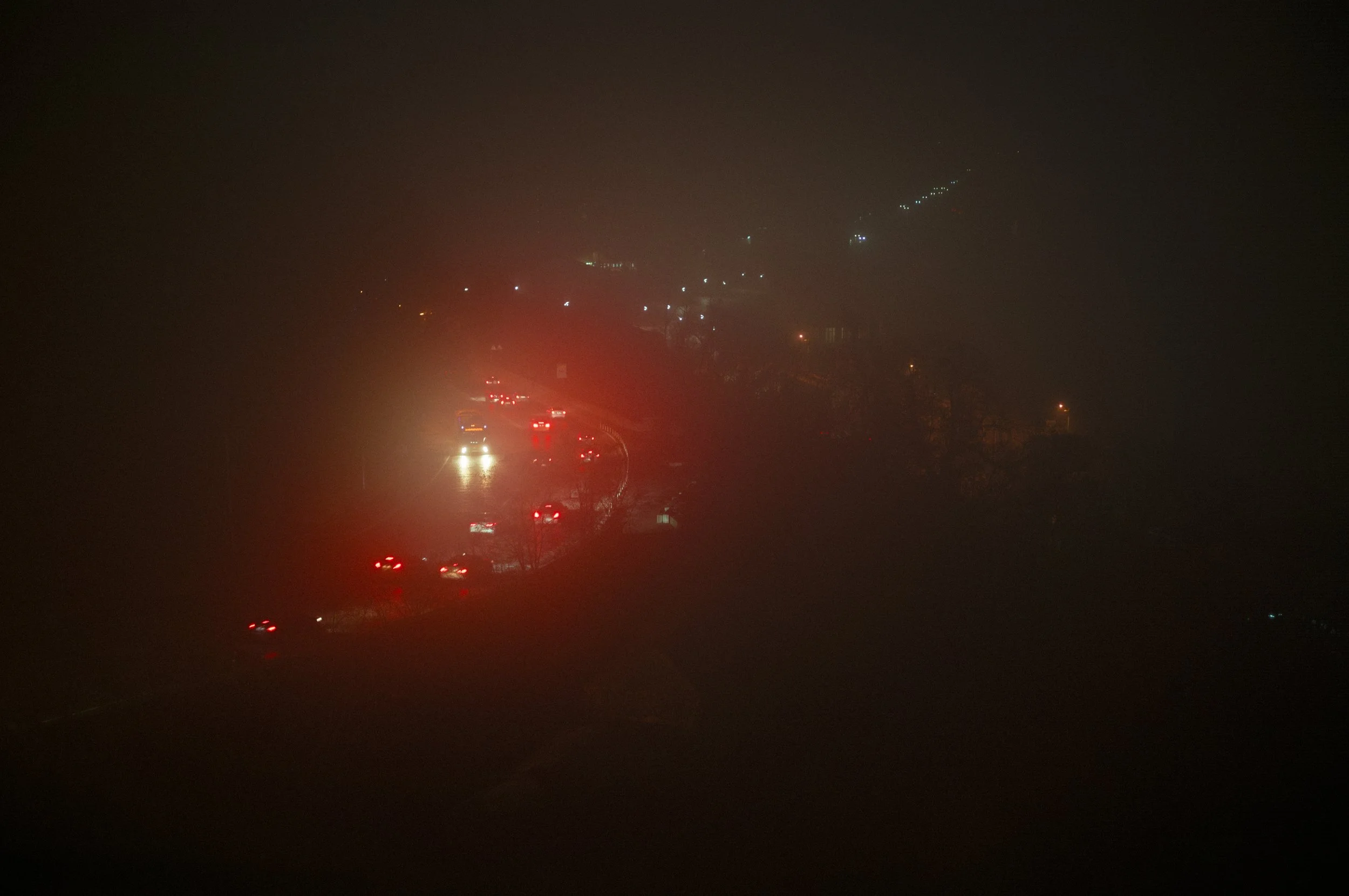
Serious road accidents have increased in Ukrainian cities due to power cuts. Traffic lights are often dark and street lights do not illuminate the path of pedestrians and cyclists. Kyiv police told the media in November that pedestrians are more often involved in serious road accidents.
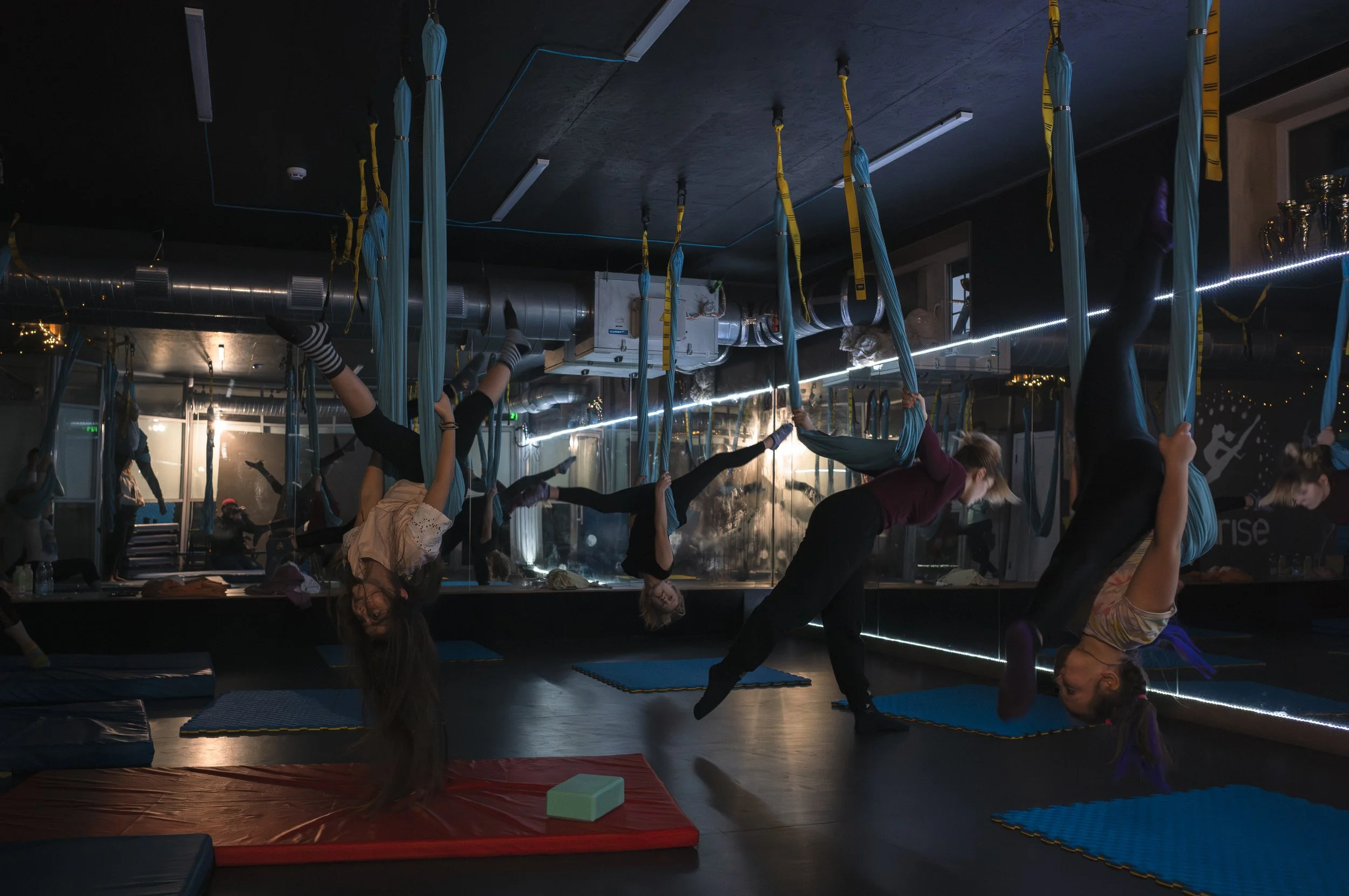
A dance school in Chernihiv operates on a rhythm of six hours of electricity, followed by six hours without. In the powerless periods, students dance under LED lights, powered by car batteries. Established during the pandemic in 2021, the school also endured damage during Russia’s intense attacks in spring 2022, with a nearby strike flooding the basement studios.
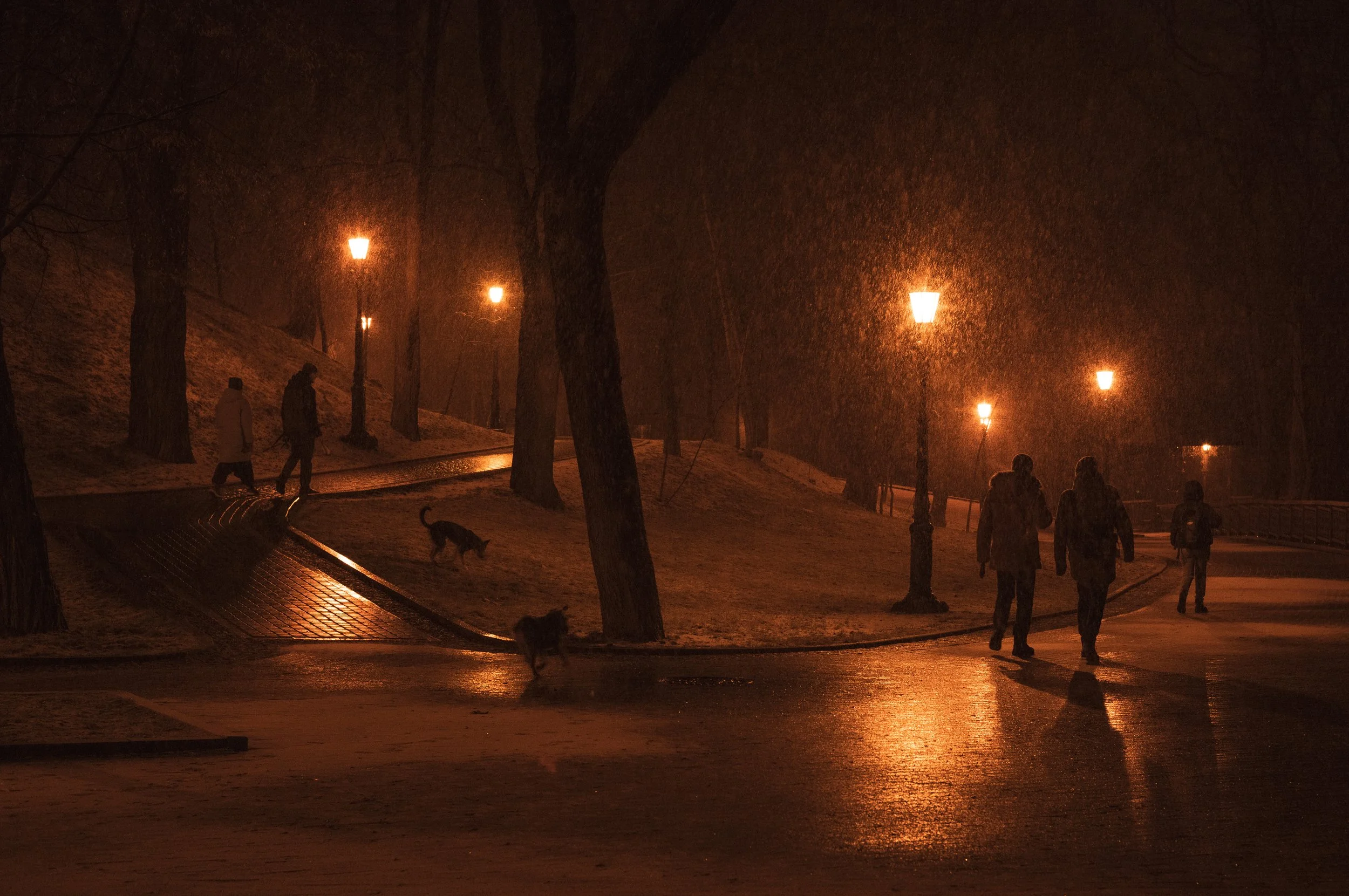
As Ukraine braces for the anniversary of Russia’s major offensive on February 20, 2023, the future is shrouded in uncertainty. Despite the dark winter, a park in central Kyiv shines surprisingly brightly, albeit with lights that occasionally flicker and die.
A generator-powered kiosk in central Kyiv waits for customers. Repeated Russian missile and drone attacks on Ukraine’s energy infrastructure have forced residents and businesses to rely on diesel generators, with electricity available only for a few hours each day.
On January 27, 2023, darkness shrouds Kyiv, home to three million people. Just the day before, Russia fired 55 missiles, with Ukraine successfully intercepting 47 of them. These attacks led to at least 11 fatalities and plunged the capital into days of power outages.
Fifteen-year-old Karina Bykova, residing in a high-rise in Chernihiv, Northern Ukraine, faces daily power outages, leading to darkness and cold at home, with the water supply often cut off. ‘After school, I have about three hours to do my homework before it gets dark, and then I just sleep.’
On a crisp February 2023 night, only stars guide evening walkers in Dytynets Park, one of Chernihiv’s oldest areas, favoured for leisure and dog walking. For those venturing out, wearing a headlamp is advisable.
The war and resultant power outages impact all life forms, as seen in Kyiv’s botanical garden. Home to a decades-old collection of thousands of plants needing tropical conditions, the garden faces a critical challenge. Lead researcher Roman Ivannikov, with 26 years of service, has maintained the plants throughout the difficult war year.
Serious road accidents have increased in Ukrainian cities due to power cuts. Traffic lights are often dark and street lights do not illuminate the path of pedestrians and cyclists. Kyiv police told the media in November that pedestrians are more often involved in serious road accidents.
‘We experienced severe hardships when Russia attacked Kyiv’, Ivannikov says. ‘If we had left, the plants would have perished.’ He remembers times between December and January when the temperature in the main greenhouse plummeted to around three degrees Celsius, a stark contrast to needed tropical conditions. The staff resorted to burning wood inside to provide some warmth.
A dance school in Chernihiv operates on a rhythm of six hours of electricity, followed by six hours without. In the powerless periods, students dance under LED lights, powered by car batteries. Established during the pandemic in 2021, the school also endured damage during Russia’s intense attacks in spring 2022, with a nearby strike flooding the basement studios.
As Ukraine braces for the anniversary of Russia’s major offensive on February 20, 2023, the future is shrouded in uncertainty. Despite the dark winter, a park in central Kyiv shines surprisingly brightly, albeit with lights that occasionally flicker and die.
Shrouded in darkness
2022–2023, Suomen Kuvalehti
For nearly nine years, the conflict in Ukraine has cast a shadow over the lives of all Ukrainians. While the frontline may be distant, the sound of air raid sirens at night reverberates throughout the country, interrupting the sleep of families and forcing them to seek shelter.
In late autumn 2022, Russia, having suffered repeated defeats on the battlefield, launched a systematic assault on Ukraine's energy infrastructure. The resulting power outages weigh heavily on people’s daily lives, causing homes to go cold and cutting off water supplies. As energy consumption is being rationed, business suffers, and leisure activities become harder to pursue.
The impact of power outages can be long-lasting. A generation of Ukrainians is growing up locked in their homes, first by the pandemic and then by the war. While the pandemic taught them how to study remotely, learning becomes impossible without electricity.
The winter has been long, but Ukrainians persevere. By mid-February, there is a sense of cautious optimism as power cuts have become less frequent and shorter in duration. Everyone knows that this sense of fortune is fragile and one strike can plunge neighbourhoods into darkness for days.
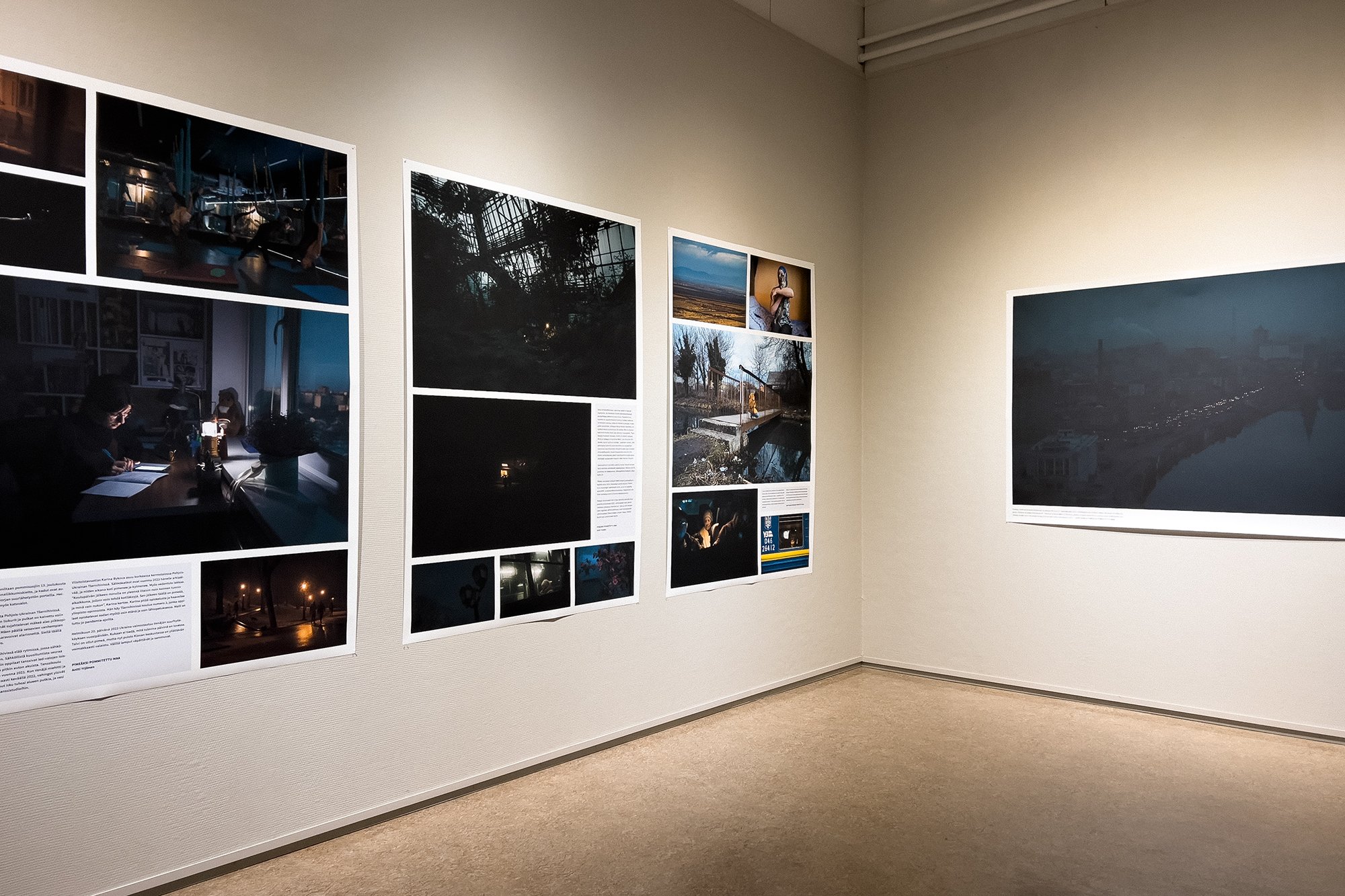
Shrouded in Darkness was presented as a solo exhibition at Mikkeli Centre of Photography, 22 Feb–30 Mar 2024.