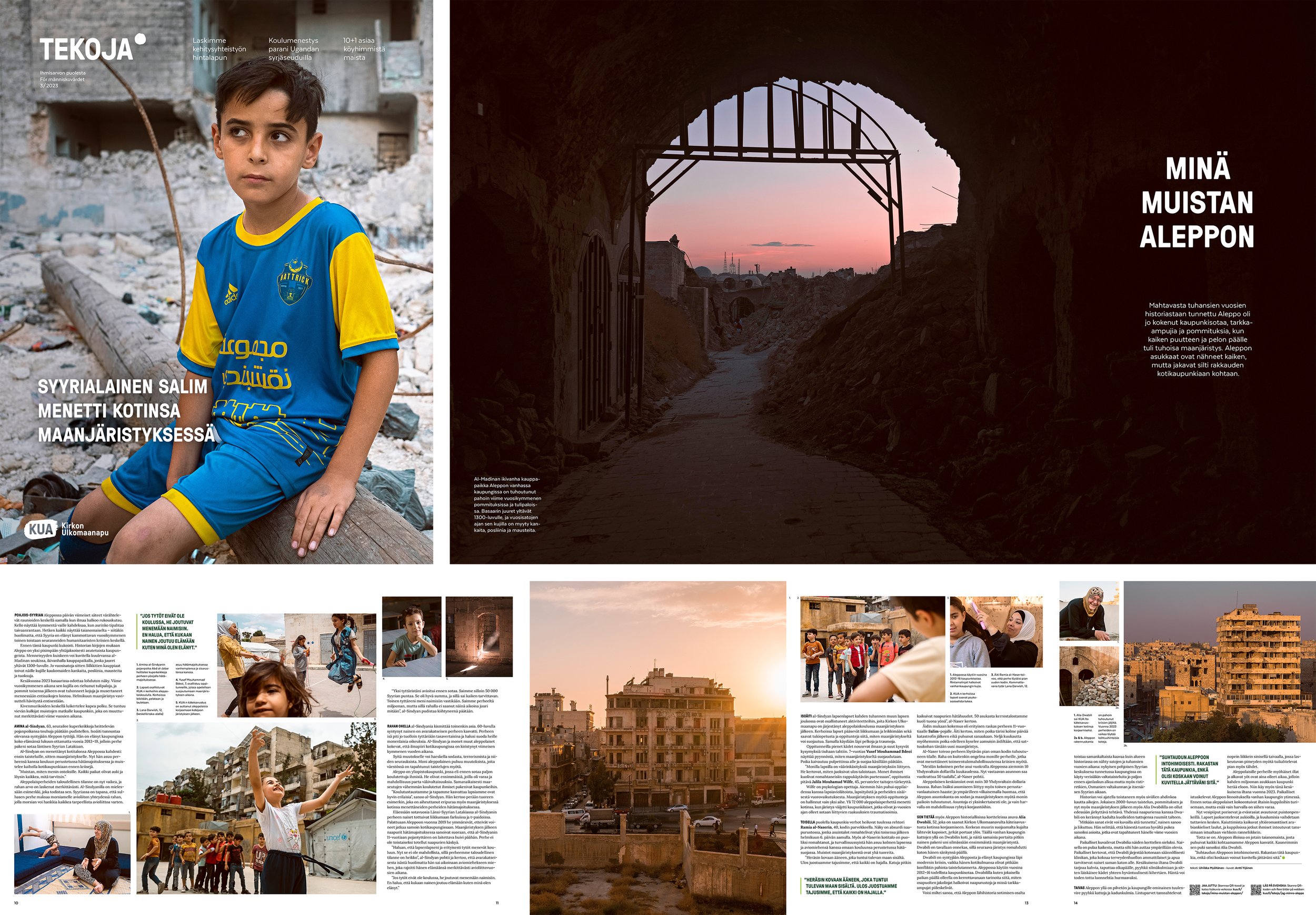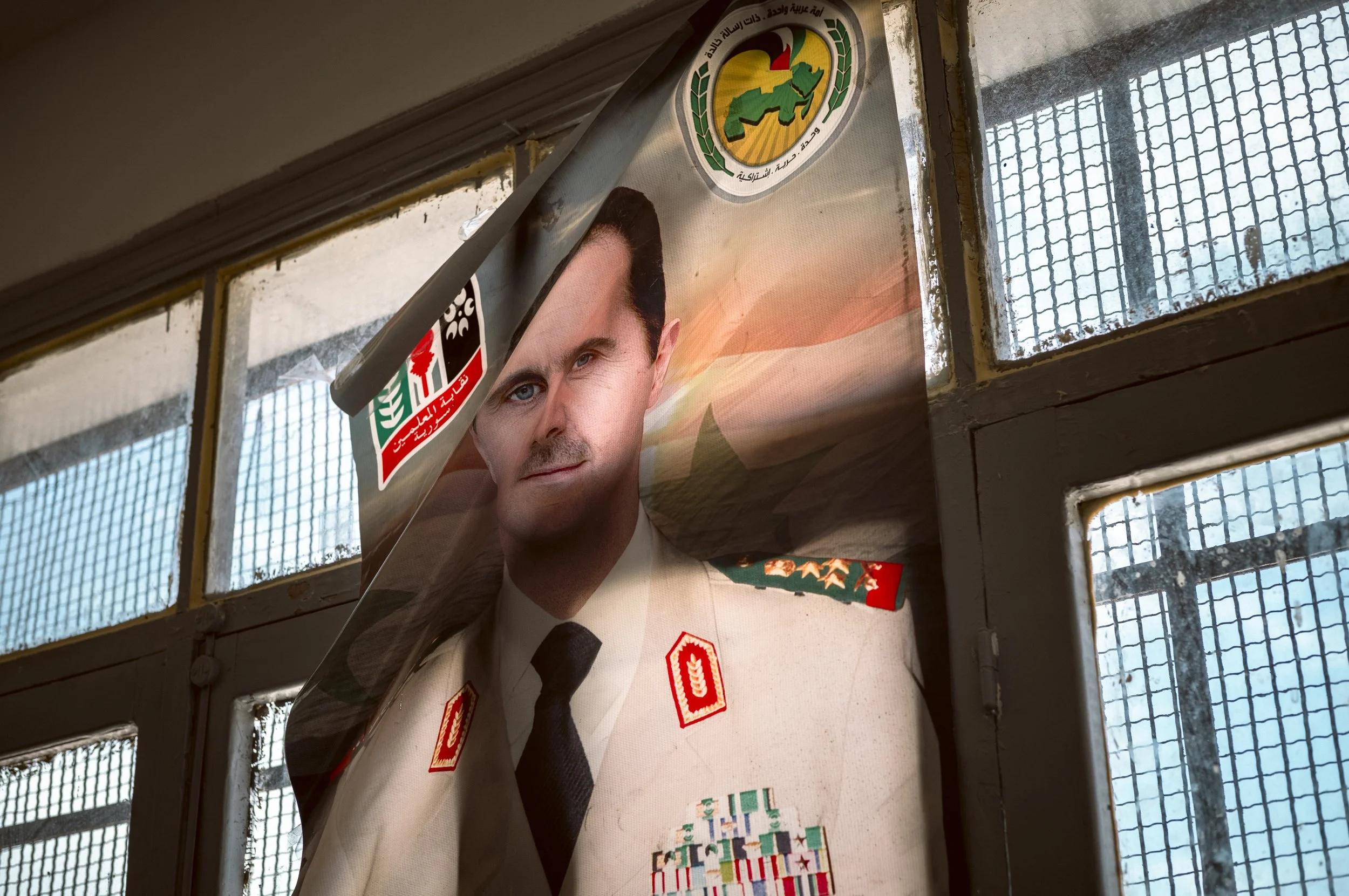
An image of Bashar al-Assad hangs in front of a window of a school in rural Raqqa. In areas under government control in Syria, it's inescapable to encounter images of the autocratic leader.
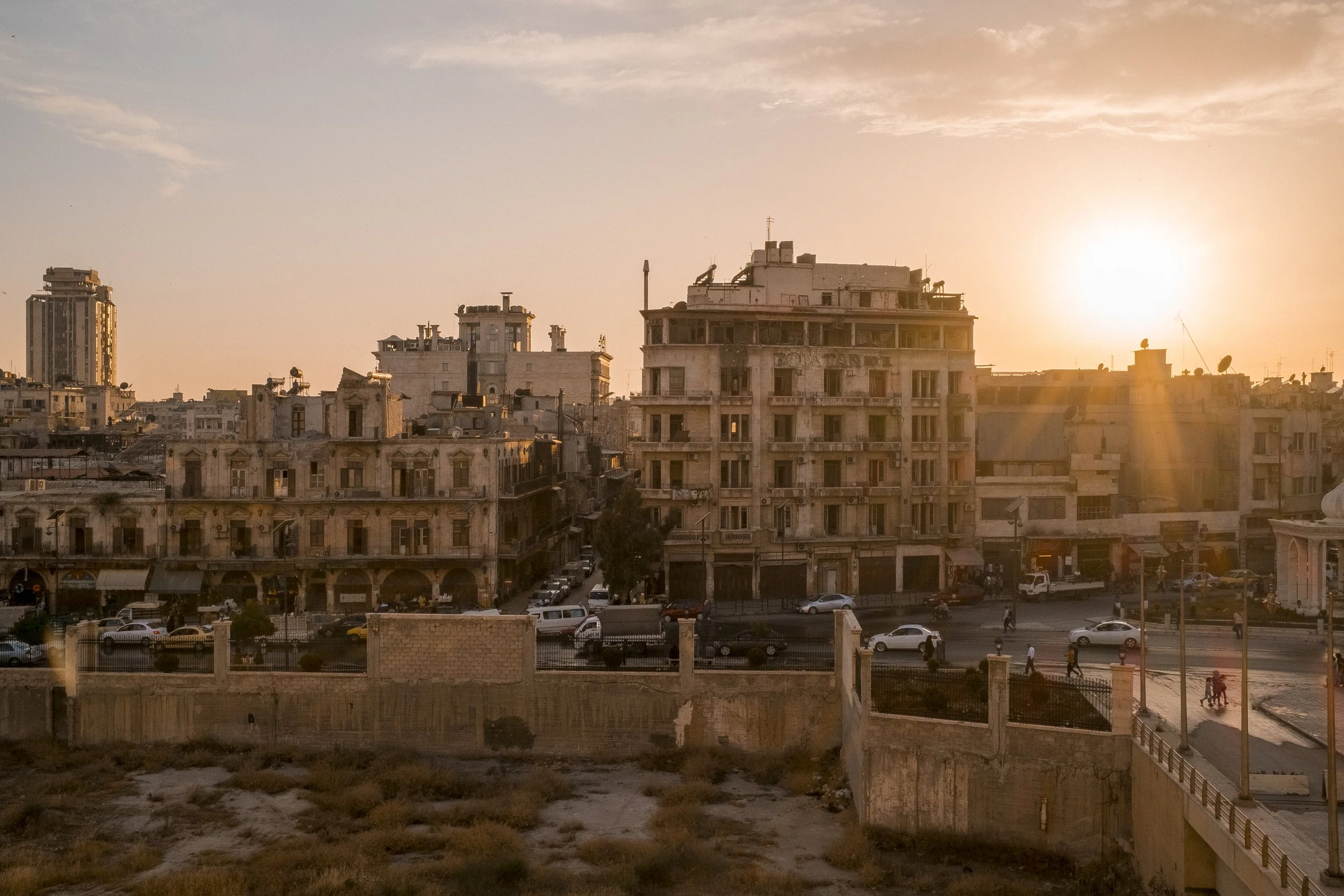
Housing in Aleppo has been severely damaged by years of war and by the earthquake. Many families face a basic problem: there is too little habitable housing, and few can afford to repair damaged apartments.
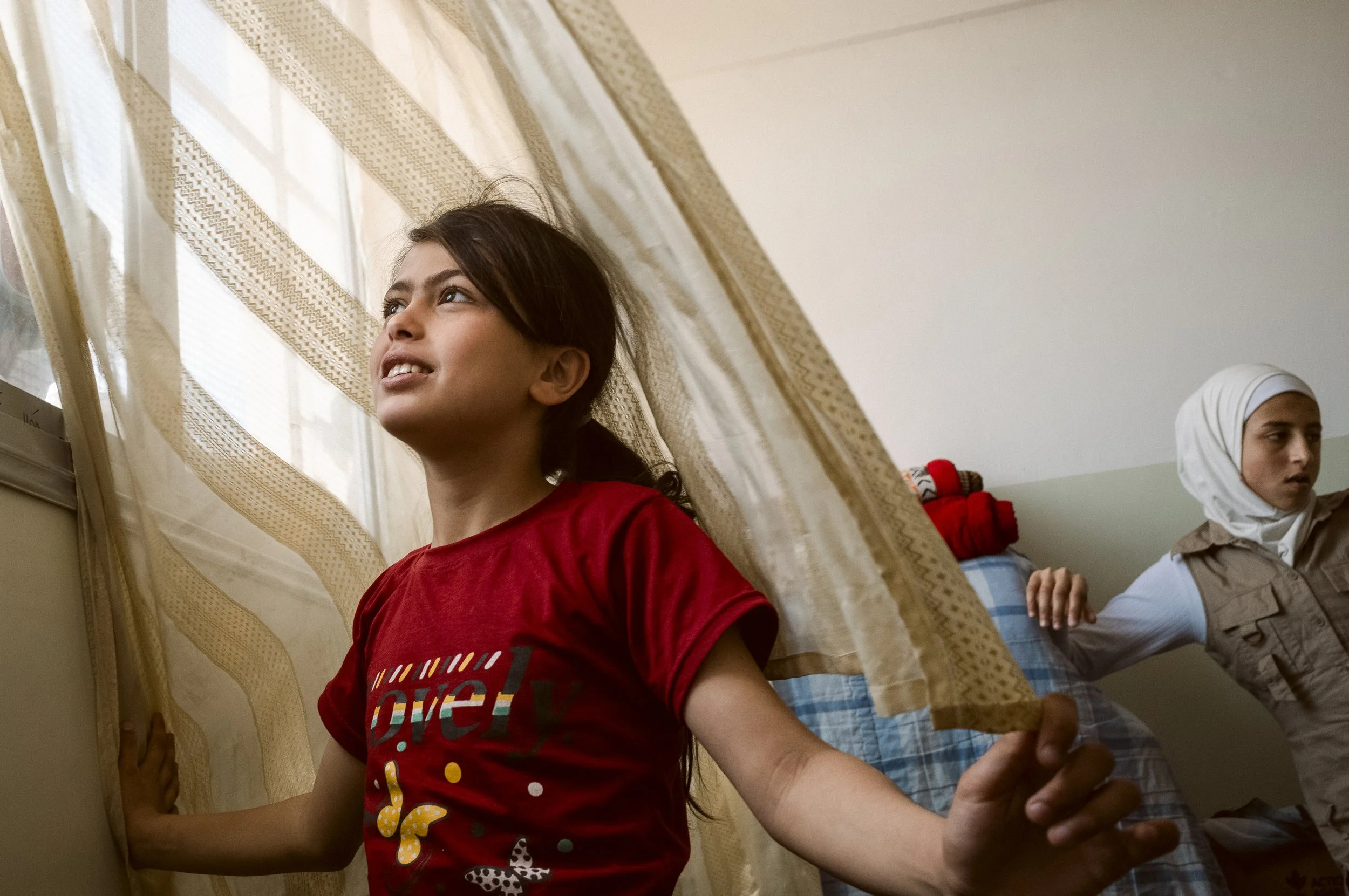
Sondos Ali al-Mhana is an 11-year-old girl living with her family in an emergency shelter, after their home was destroyed in the earthquake. She was born during the war and fled the city with her family just days after her birth, before returning in 2019.
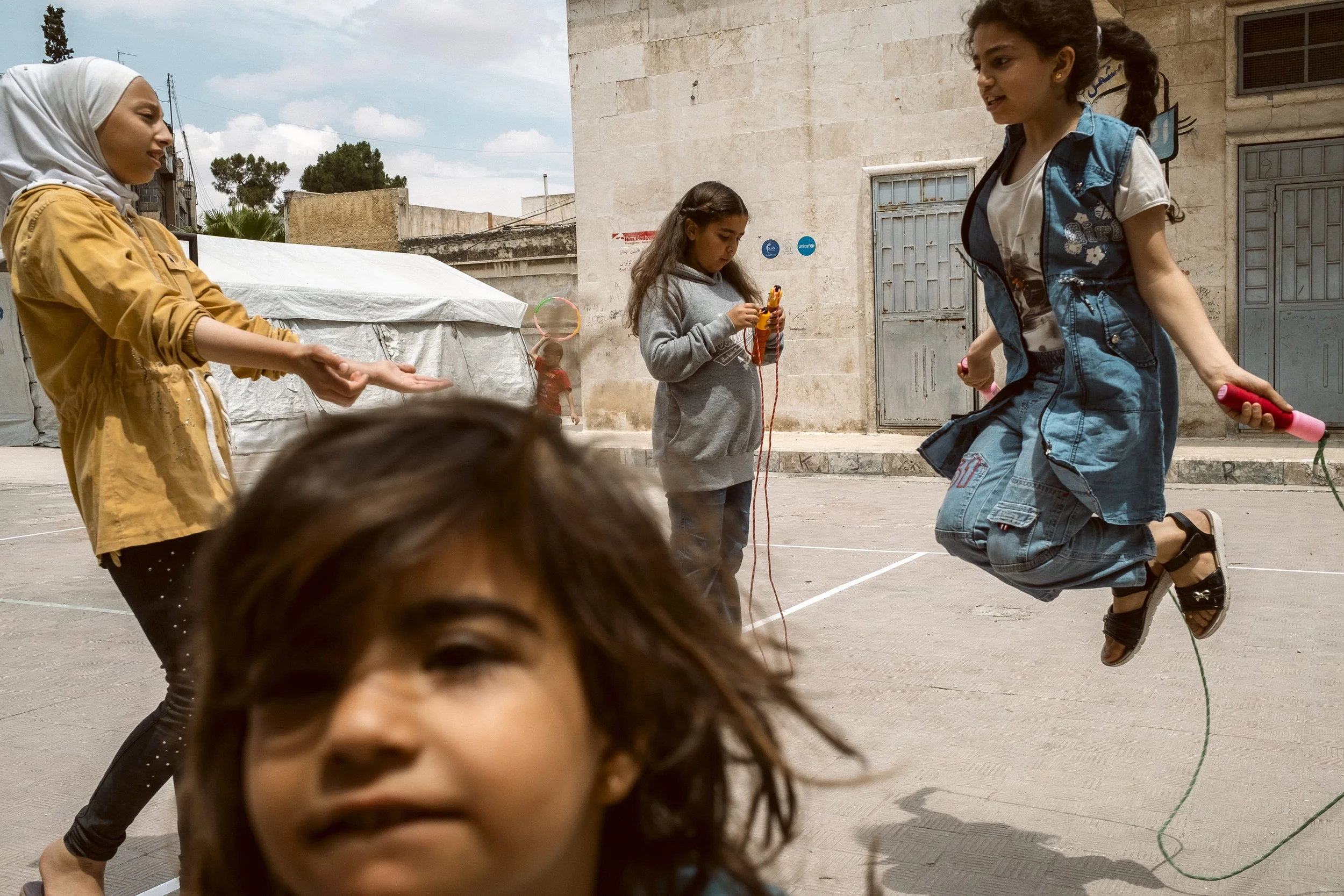
Children play skipping rope in the courtyard of a school in Aleppo, Syria. After the February 2023 earthquake, the school was turned into emergency accommodation for families who had lost their homes.
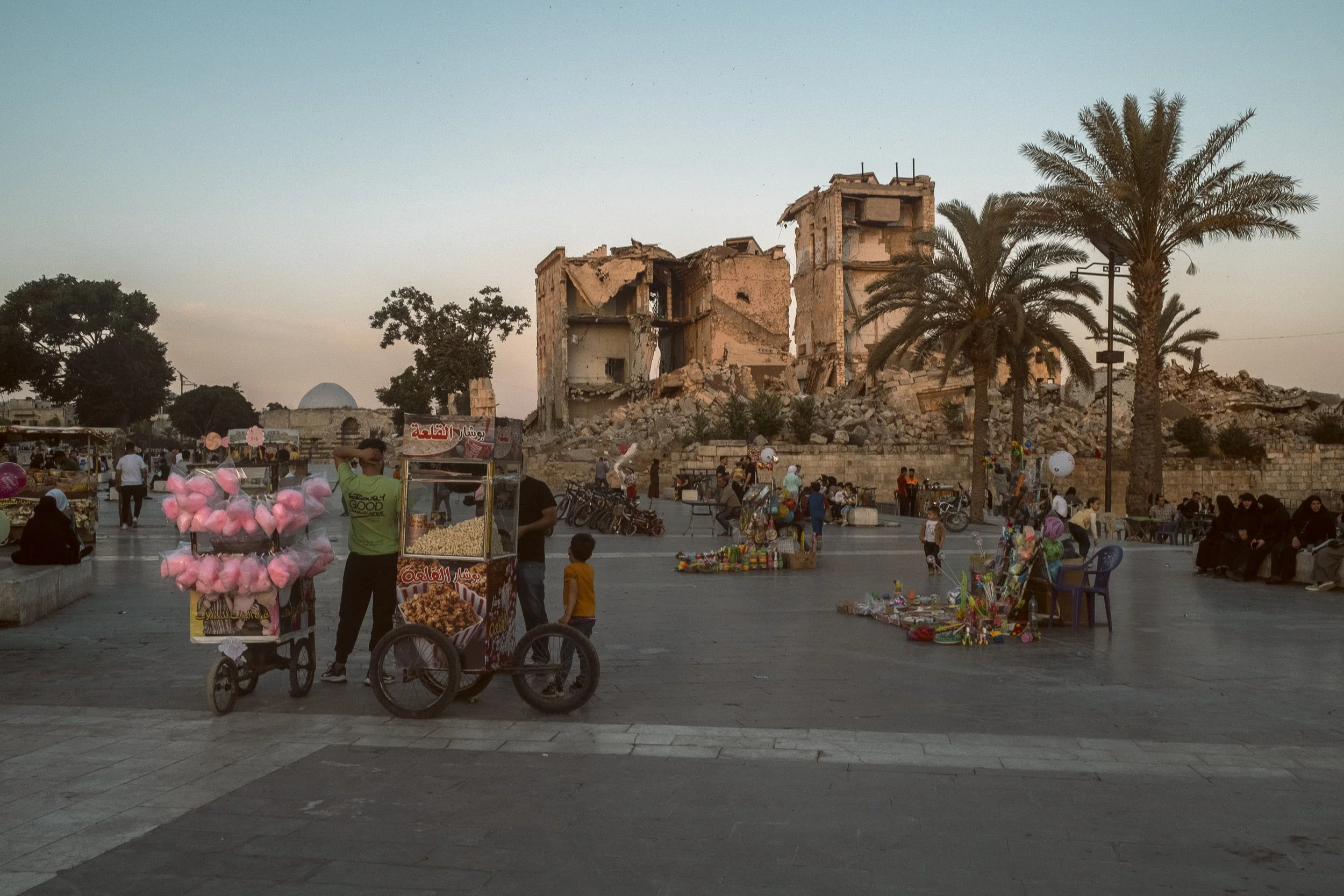
The inhabitants of Aleppo meet up at the square of the old fortress in the evenings. Few can afford to spend time in the cafés anymore.
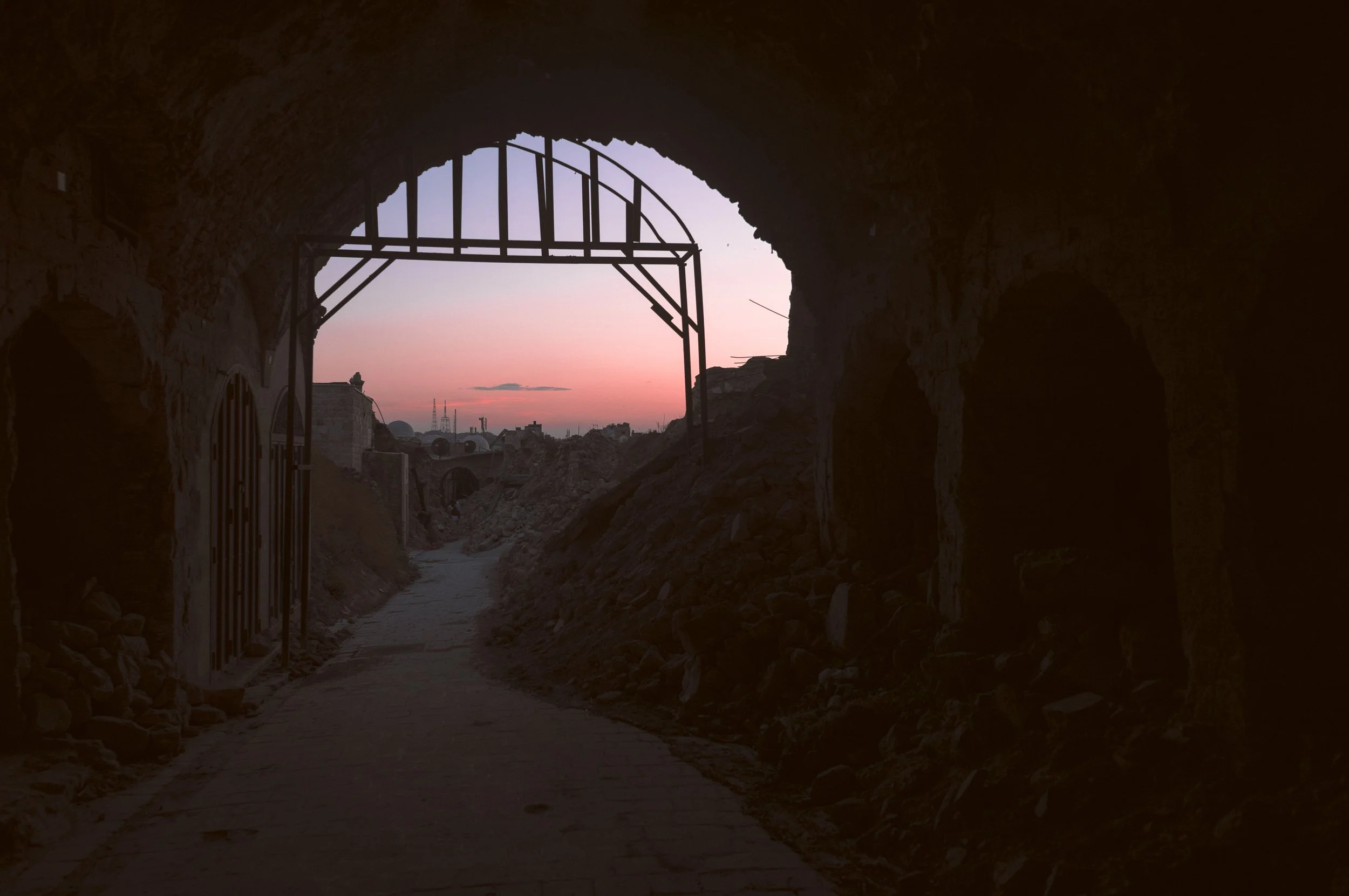
Once a major Silk Road marketplace, Souq al-Madina has been scarred by fire and years of bombing. The February earthquake caused further damage to the historic site.
An image of Bashar al-Assad hangs in front of a window of a school in rural Raqqa. In areas under government control in Syria, it's inescapable to encounter images of the autocratic leader.
Housing in Aleppo has been severely damaged by years of war and by the earthquake. Many families face a basic problem: there is too little habitable housing, and few can afford to repair damaged apartments.
Sondos Ali al-Mhana is an 11-year-old girl living with her family in an emergency shelter, after their home was destroyed in the earthquake. She was born during the war and fled the city with her family just days after her birth, before returning in 2019.
Children play skipping rope in the courtyard of a school in Aleppo, Syria. After the February 2023 earthquake, the school was turned into emergency accommodation for families who had lost their homes.
The inhabitants of Aleppo meet up at the square of the old fortress in the evenings. Few can afford to spend time in the cafés anymore.
Once a major Silk Road marketplace, Souq al-Madina has been scarred by fire and years of bombing. The February earthquake caused further damage to the historic site.
Aleppo, my beloved
2023, Tekoja Magazine
In June 2023, Aleppo still catches the light of early summer evenings, even as it carries the weight of a decade that refuses to settle. Among the world’s oldest continuously inhabited cities, it has lately been reduced, in international memory, to a single set of images: urban warfare, siege, ruin.
The damage is not only structural. War has rewritten the city’s sense of itself, the way people move through familiar streets and what they allow themselves to expect. In the alleys of Al-Madina Souk, a marketplace shaped over centuries, fire and bombardment have erased stalls and historic details. And in 2023, just as the city was trying to steady itself after years of war, the earthquake brought another shock that folded fresh loss into old wounds.
The aftermath is counted in essentials: roofs, rent, cash. Reports after the quake described more than 72,000 families losing their homes, pushing people into emergency shelters, including school buildings. With average monthly incomes put at around $30 and rents rising far beyond what many families can afford, rebuilding can feel less like a plan than a distant hope.
And still, evenings arrive. At the Aleppo Citadel, families sit on benches because cafés are out of reach, opening picnic boxes as children run through the square. The city’s affection for itself survives in these ordinary rituals, and in a refrain you hear again and again from people who have every reason to leave: home is not so easily surrendered.
This feature was shortlisted for Magazine Story of the Year at Editkilpailu 2023, organised by the Finnish Magazine Media Association, and received an honourable mention.