
A man pushes a canoe through shallow floodwater after dark on the return journey to Paguir.
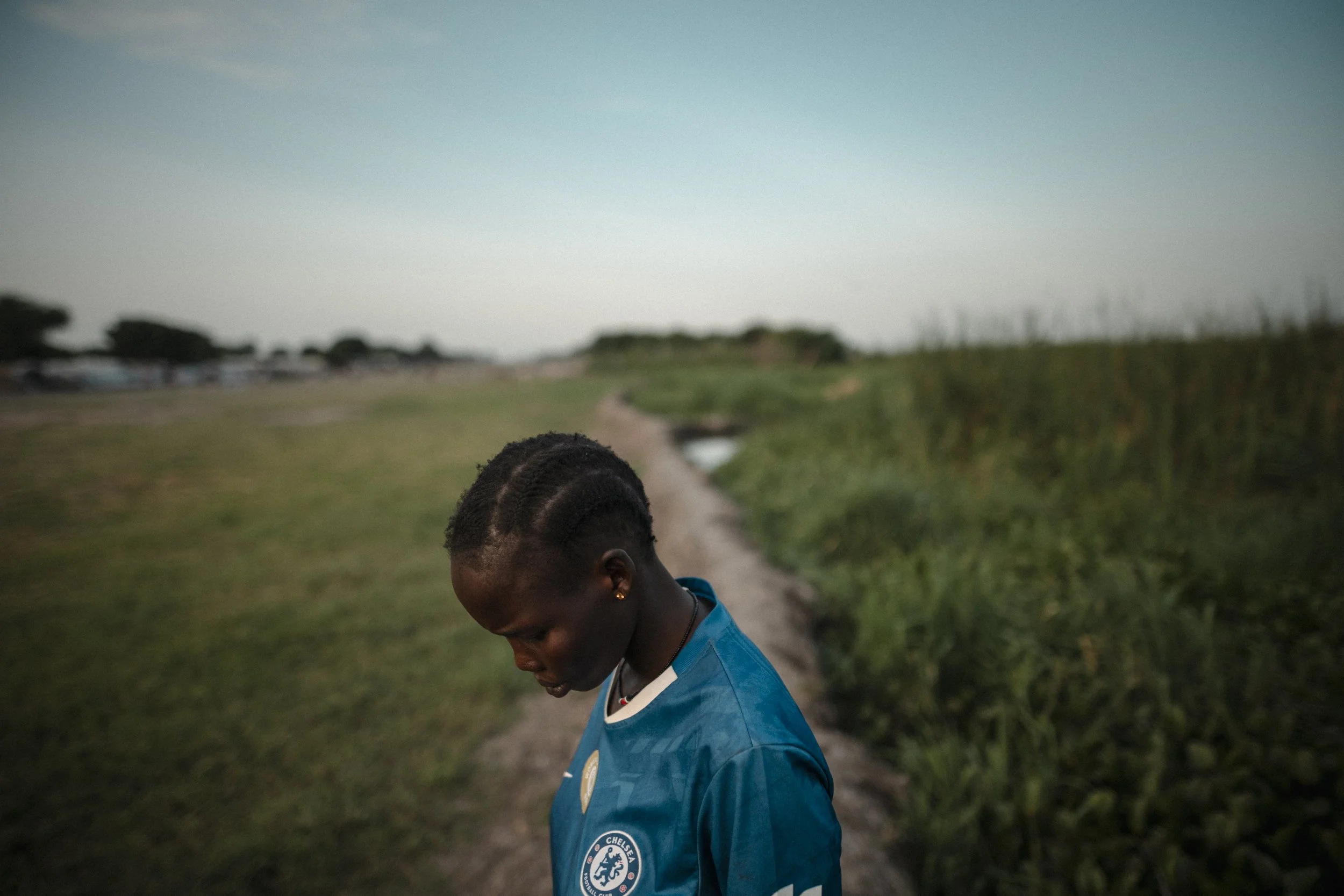
Nyaluak Deng Nger stands on a dyke in Paguir. She lives there with her mother and siblings so the children can attend school, while her father remains where he can find wood and make charcoal.
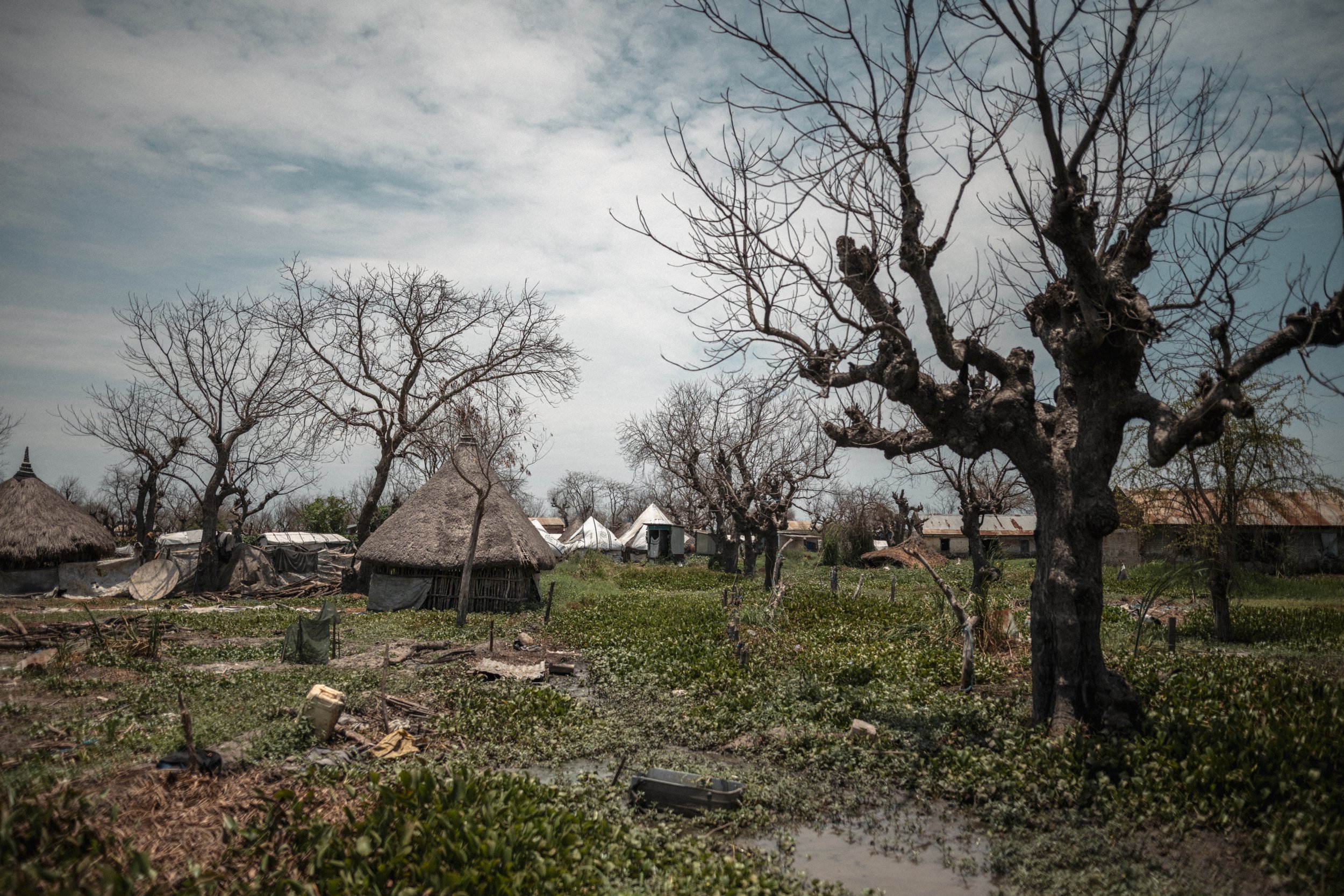
Homes in Old Fangak stand among floodwater and water hyacinth. The dyke protecting the town failed a year before this photograph was taken, displacing residents towards Paguir, Toch and other remaining high ground.
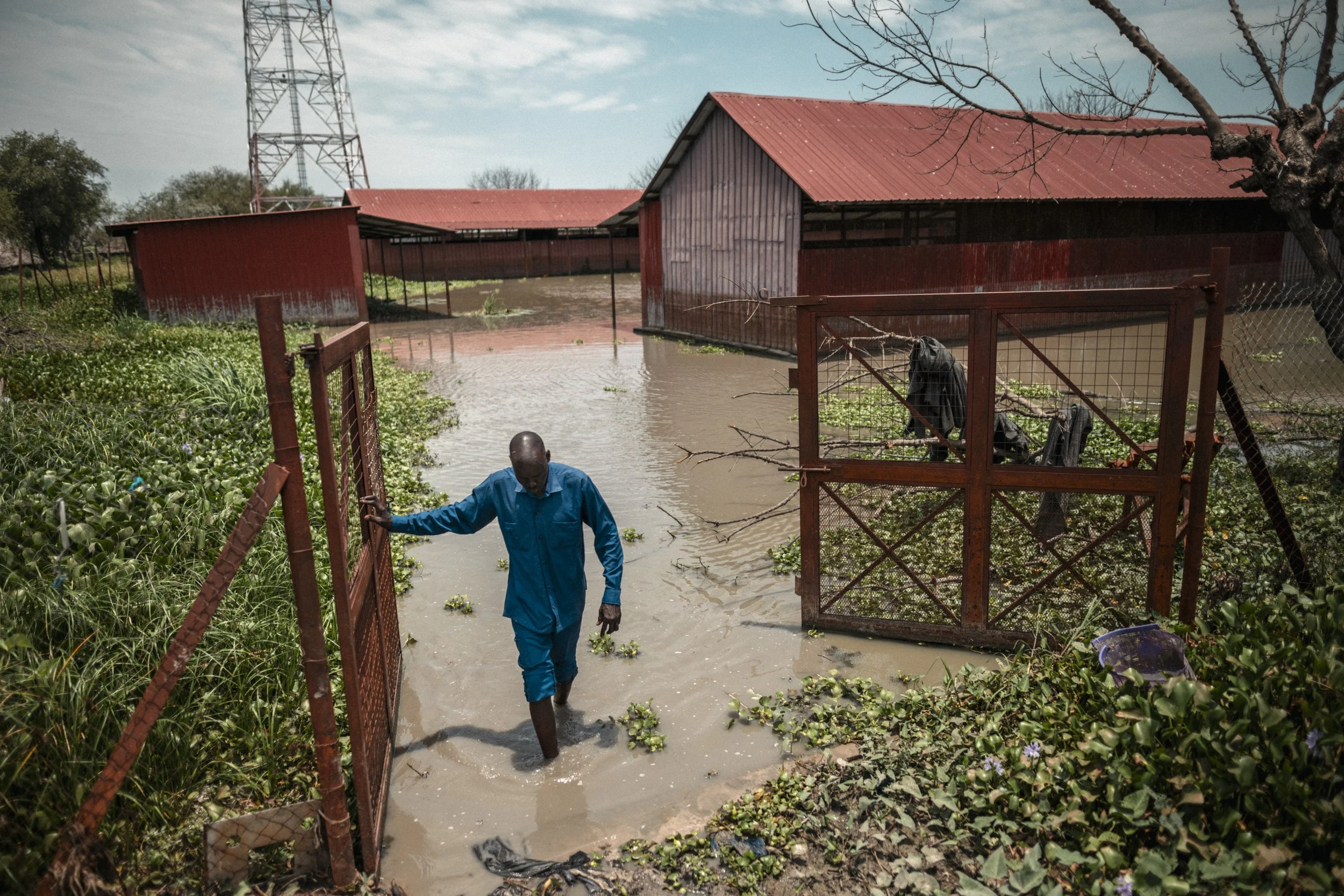
Simon Kun Tutkuach, head teacher of Old Fangak Primary School, walks through the flooded school compound. The school building remained underwater a year after the dyke protecting the town failed.
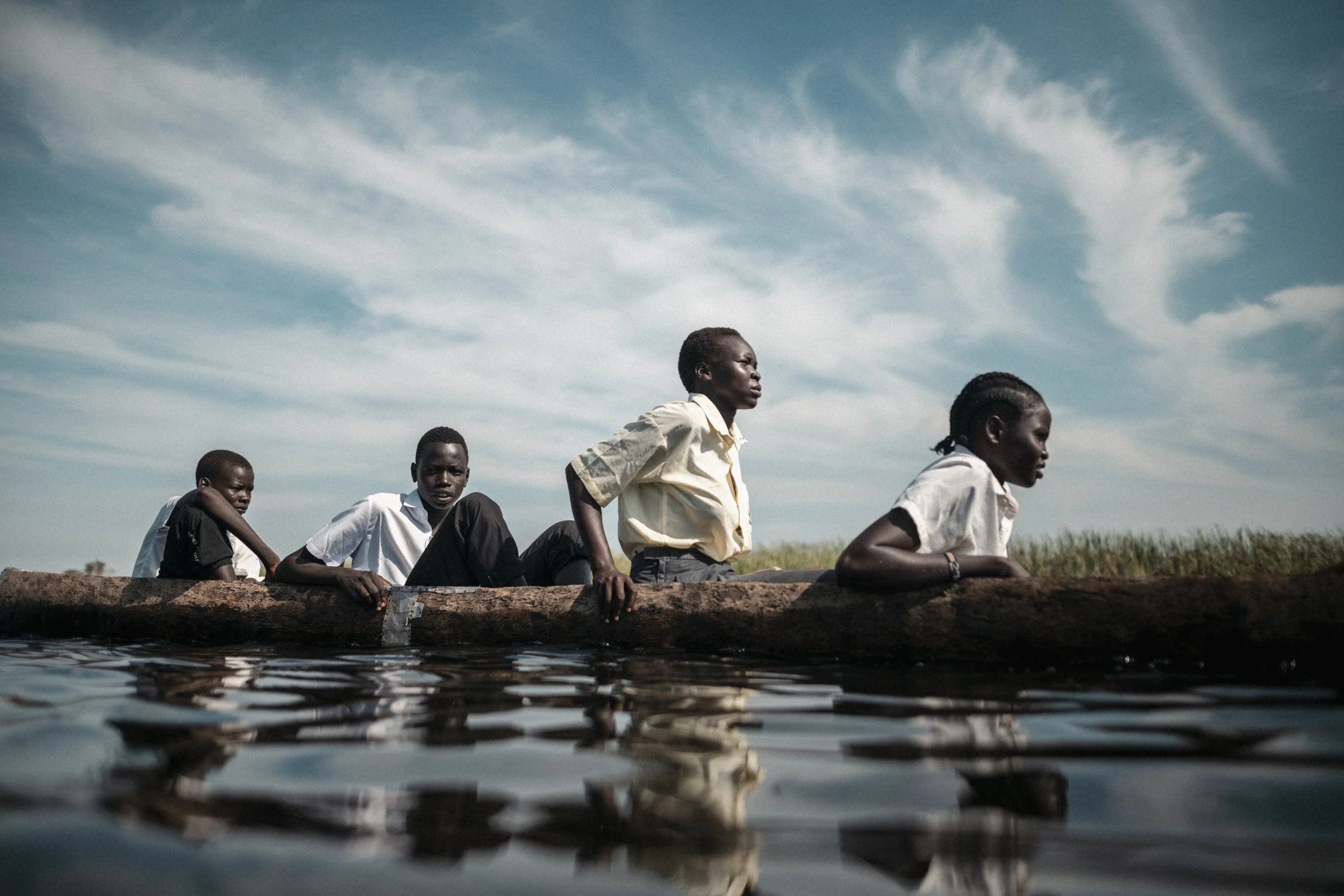
Pupils travel by canoe to school. Flooding has turned routes once crossed on foot into waterways; without a place in a canoe, children may have to wade, swim or miss class.
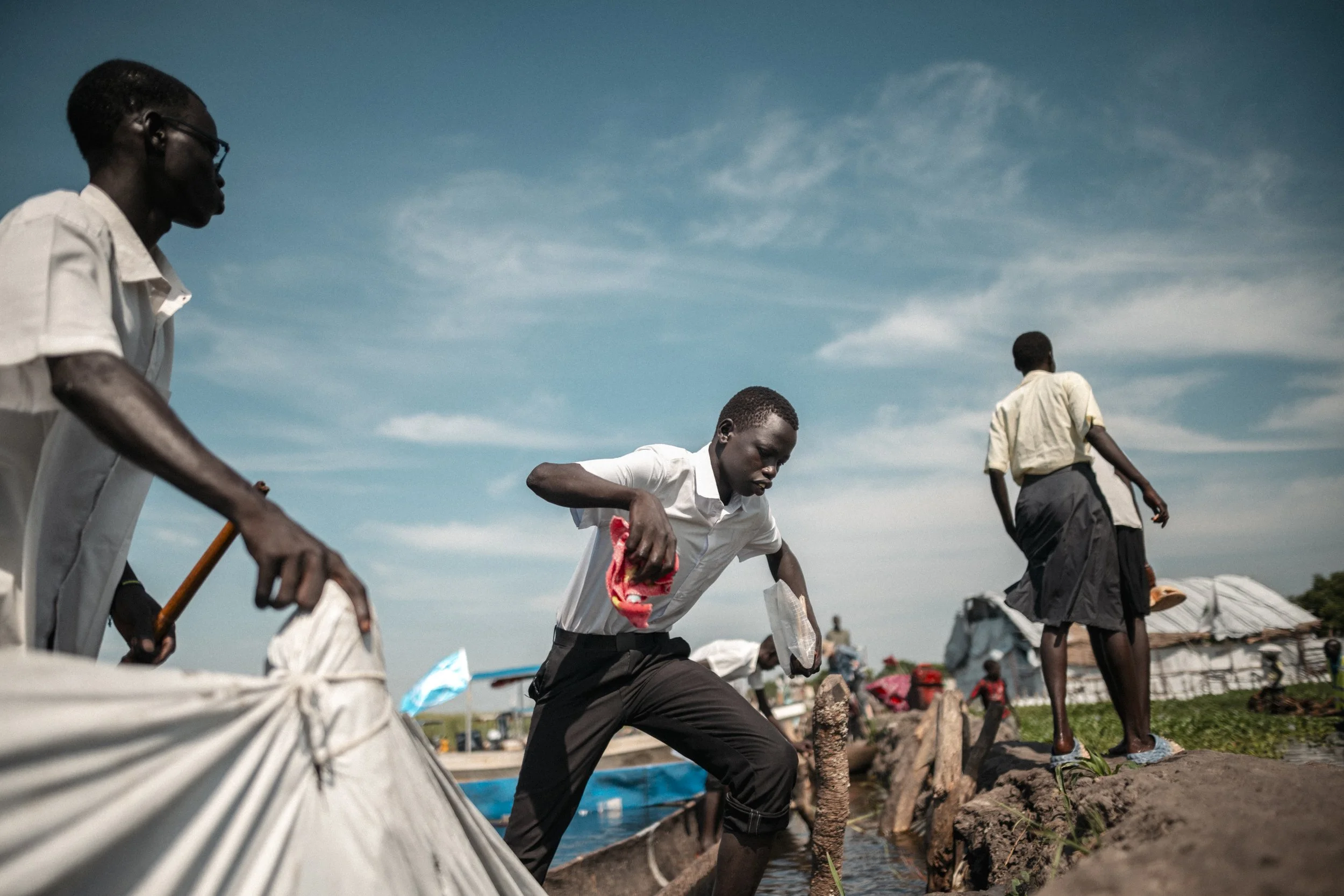
Pupils step from a canoe onto the dyke as they arrive in Paguir for school. There is no scheduled school boat, so many depend on finding space in a passing canoe.
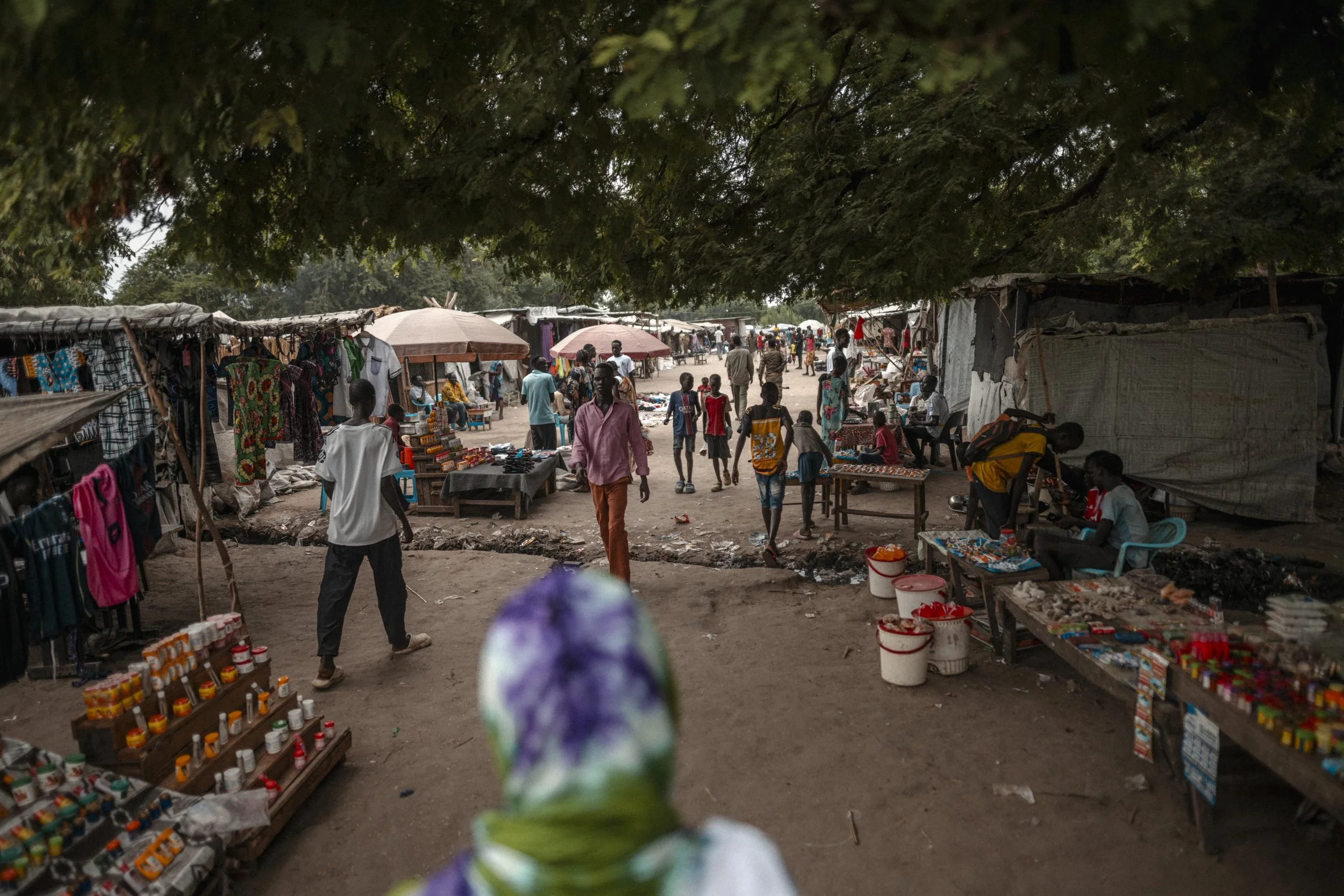
Paguir market occupies some of the area’s surviving high ground. The settlement has grown as flooding and conflict displaced families from surrounding communities.
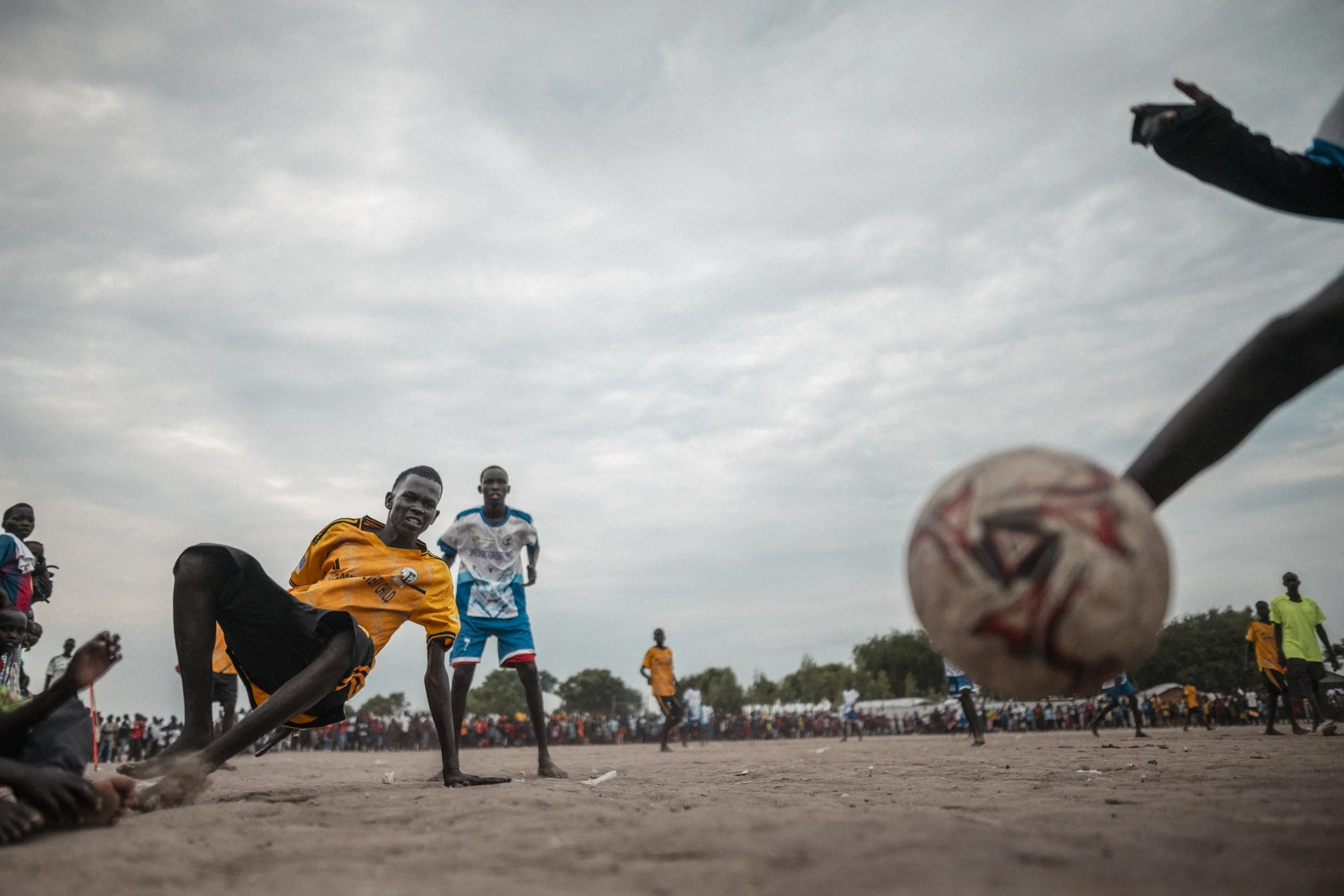
A Sunday football match draws a crowd in Paguir. With no stands or barriers, the spectators form the boundary of the pitch.
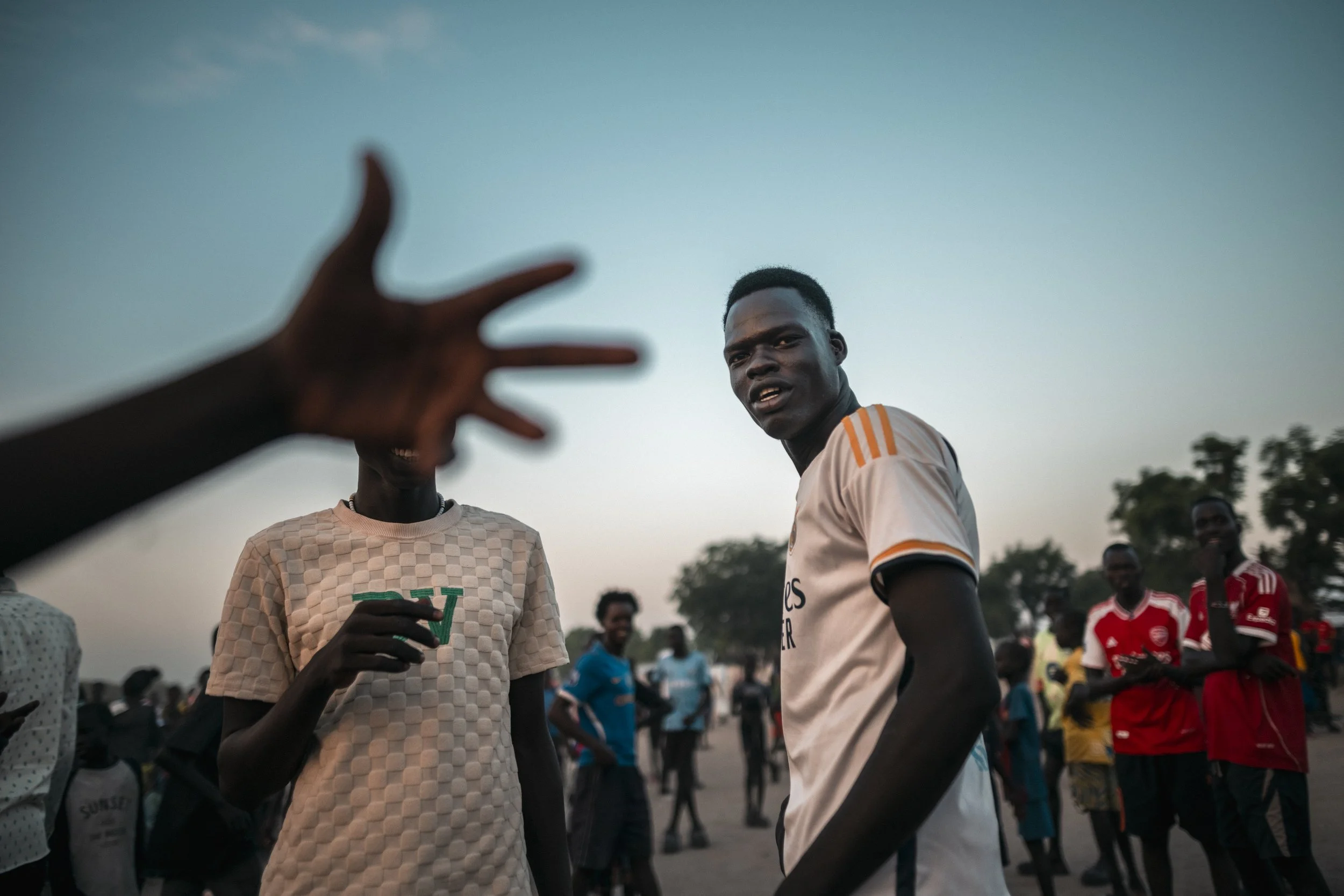
A crowd gathers around the players after a women’s volleyball match in Paguir.
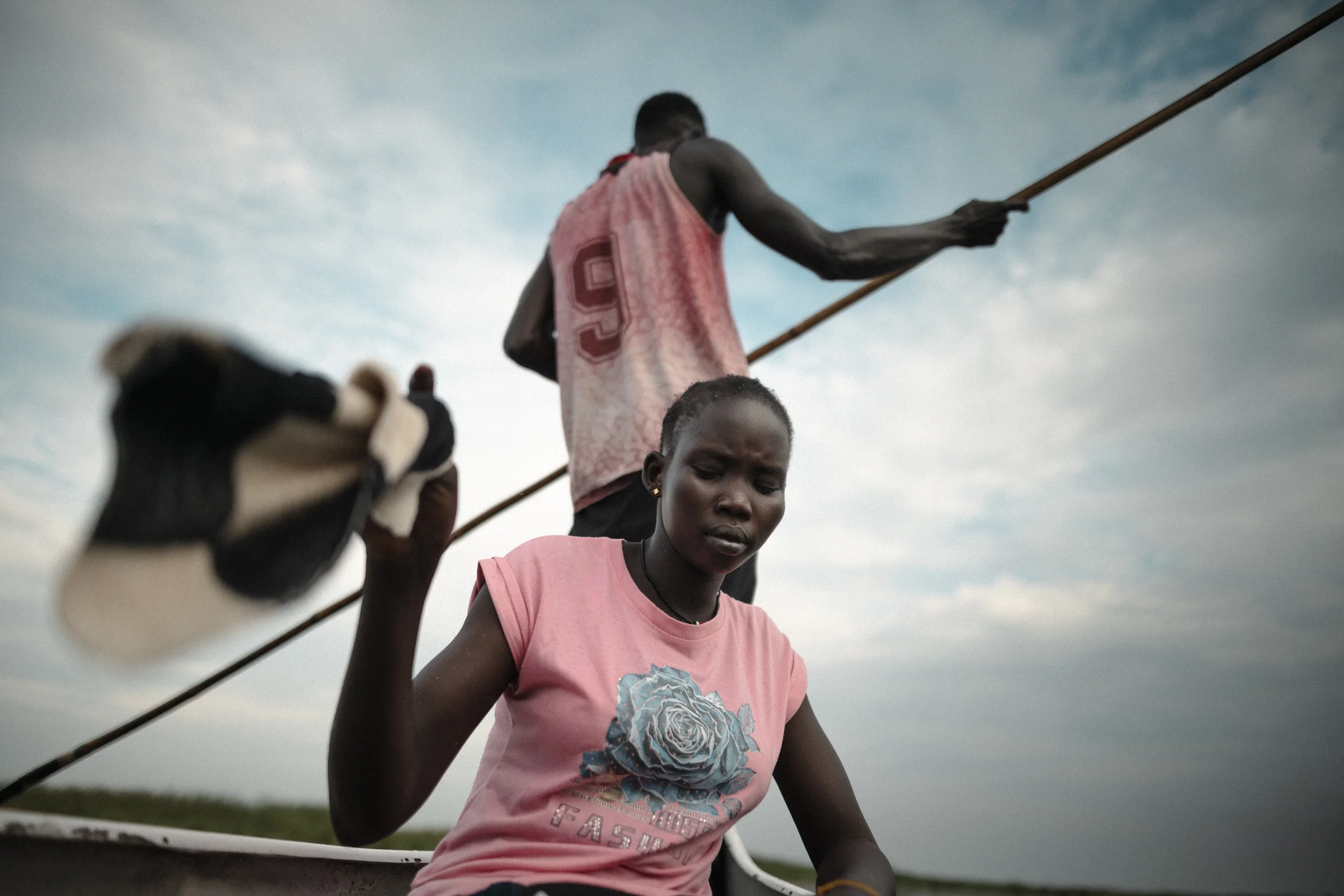
Nyaluak Deng Nger uses a small towel to drive away mosquitoes during the canoe journey back to Paguir after visiting her father, Deng Nger Wuor. A route once walked over dry land now takes seven or eight hours by local canoe.
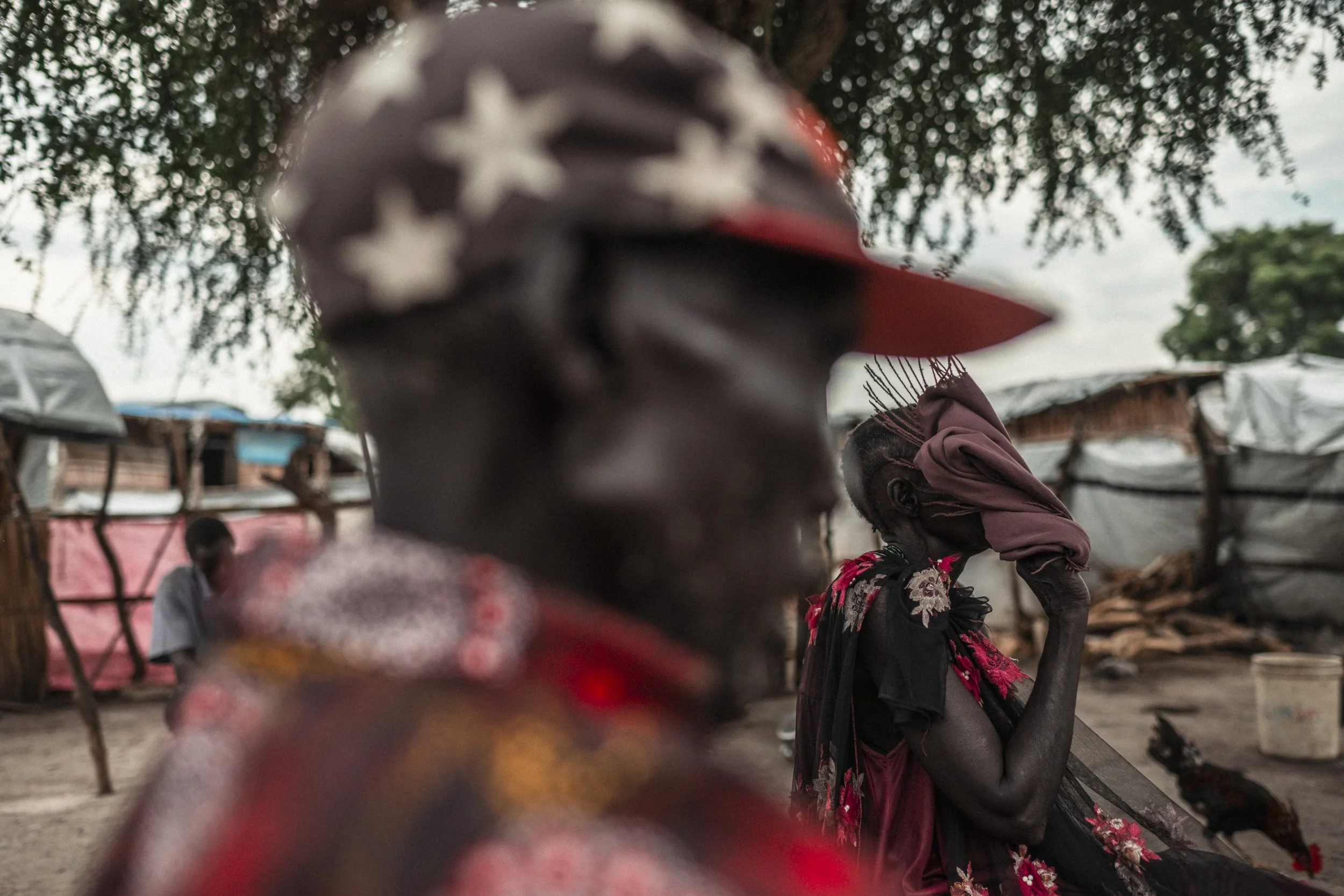
Nyadak Muon Nhial, in focus behind her husband, Deng Nger Wuor, during his visit to the family in Paguir. Deng had travelled for nine hours to reach them. The couple live apart so their children can attend school: Nyadak stays with them in Paguir, while Deng remains where he can make charcoal.
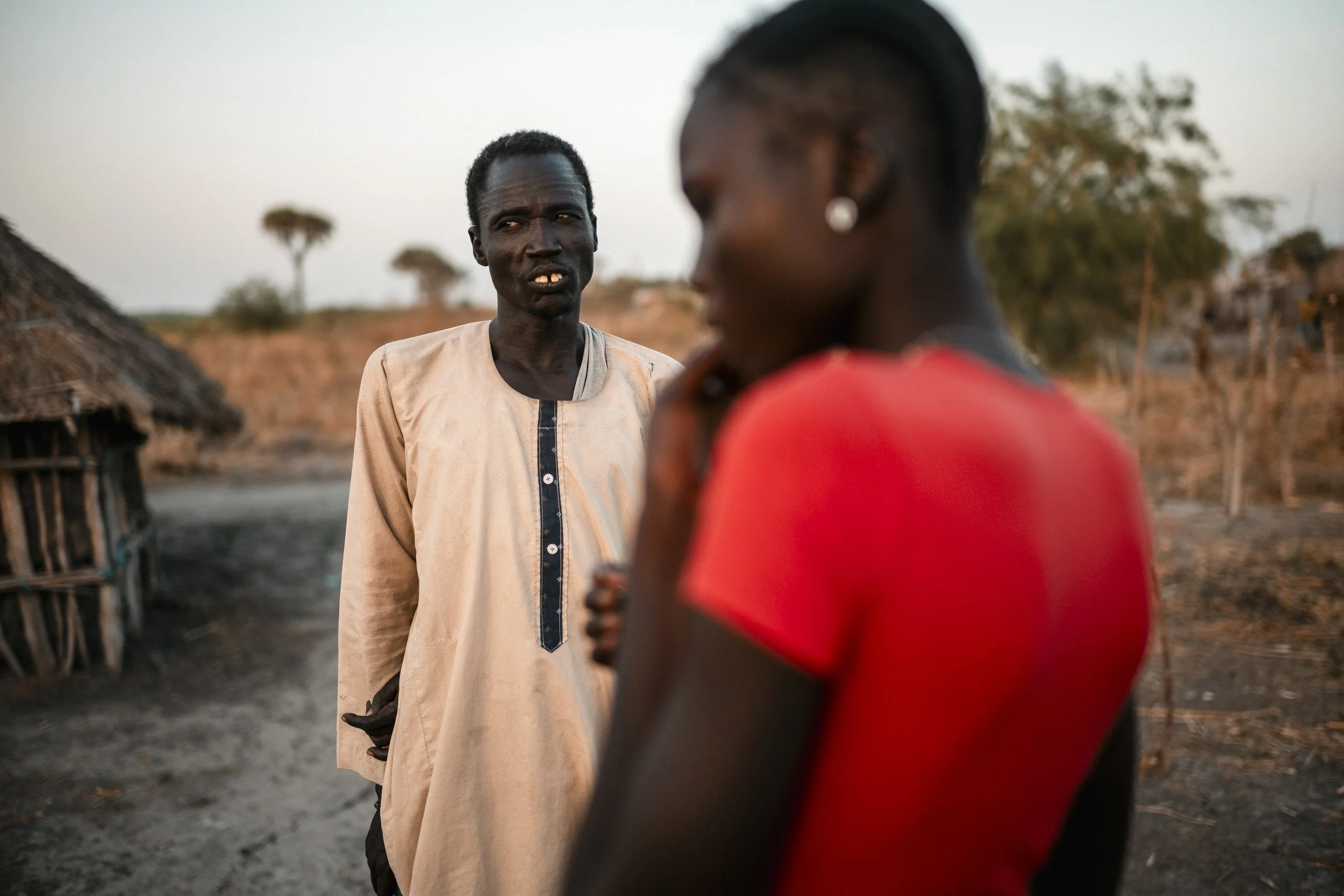
Nyaluit Tang Chuol speaks with her father, Tang Chuol Koryom, in their village of Bichul Kuon. Despite the disruption caused by flooding, the family continues to support its children’s education.
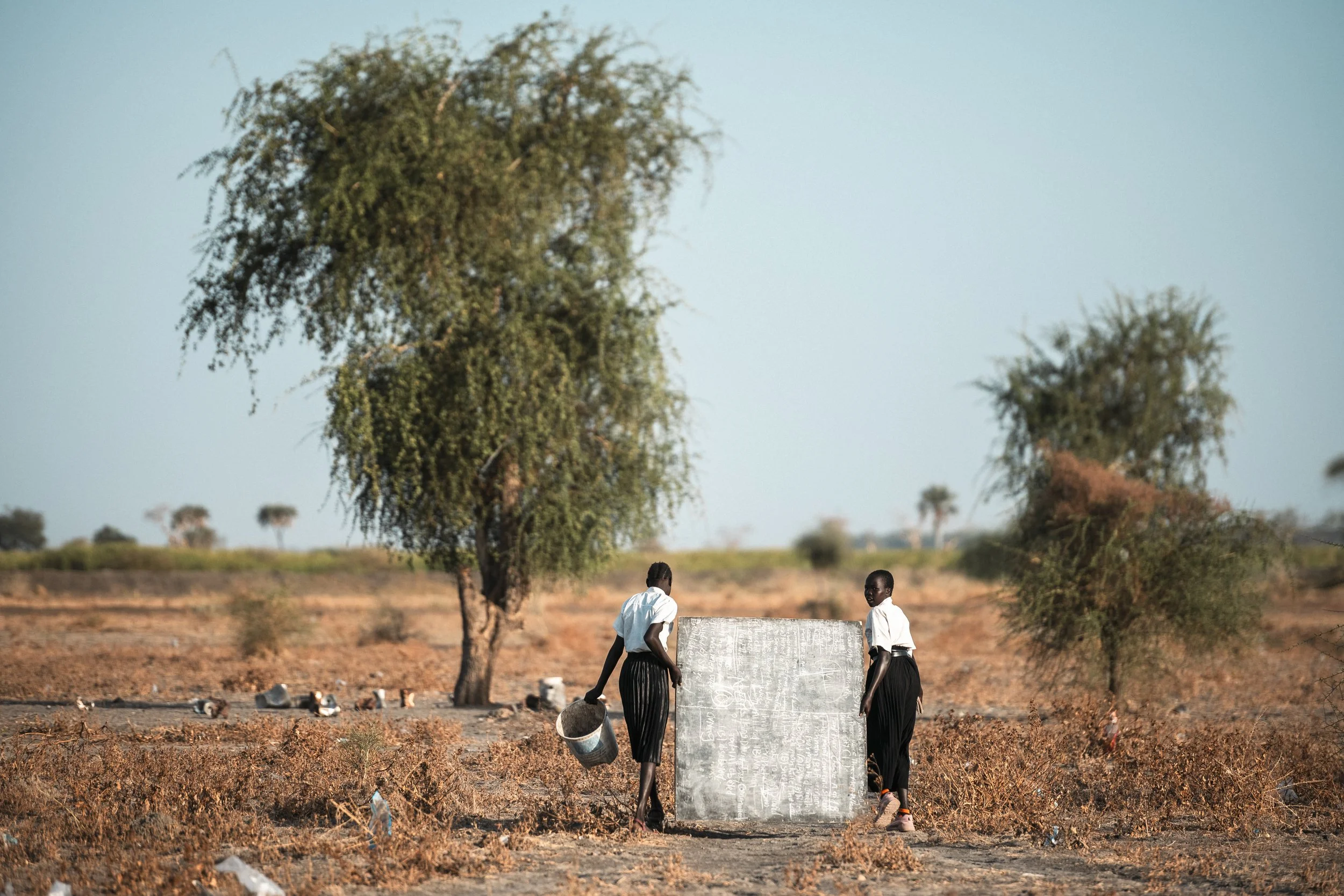
Two girls carry a chalkboard across the dry ground to set up their classroom beneath a tree in New Fangak.
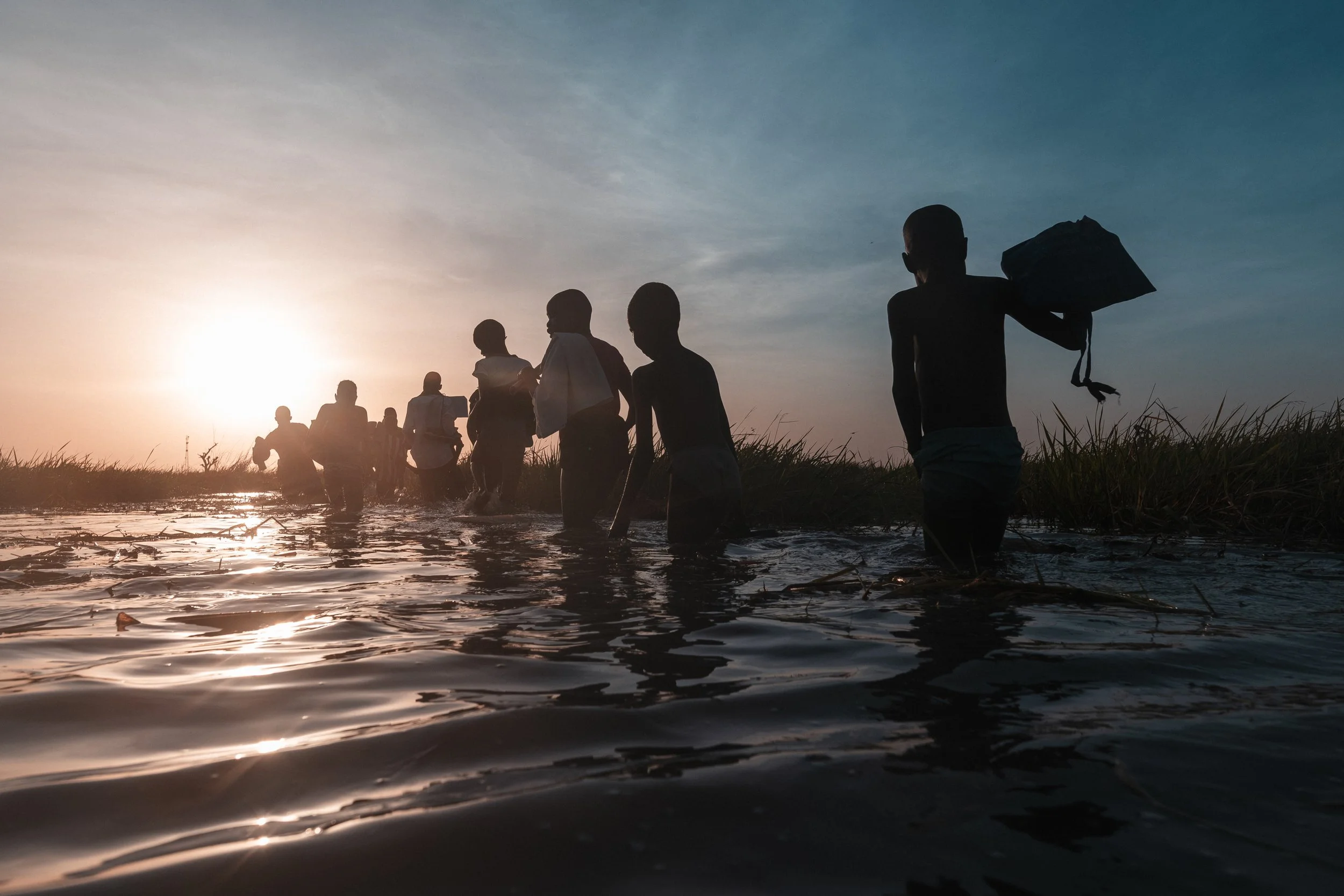
At sunrise, pupils wade through the Sudd wetlands on their way to school. The daily route crosses waist-deep water where snakes and crocodiles are a risk.
A man pushes a canoe through shallow floodwater after dark on the return journey to Paguir.
Nyaluak Deng Nger stands on a dyke in Paguir. She lives there with her mother and siblings so the children can attend school, while her father remains where he can find wood and make charcoal.
Homes in Old Fangak stand among floodwater and water hyacinth. The dyke protecting the town failed a year before this photograph was taken, displacing residents towards Paguir, Toch and other remaining high ground.
Simon Kun Tutkuach, head teacher of Old Fangak Primary School, walks through the flooded school compound. The school building remained underwater a year after the dyke protecting the town failed.
Pupils travel by canoe to school. Flooding has turned routes once crossed on foot into waterways; without a place in a canoe, children may have to wade, swim or miss class.
Pupils step from a canoe onto the dyke as they arrive in Paguir for school. There is no scheduled school boat, so many depend on finding space in a passing canoe.
Paguir market occupies some of the area’s surviving high ground. The settlement has grown as flooding and conflict displaced families from surrounding communities.
A Sunday football match draws a crowd in Paguir. With no stands or barriers, the spectators form the boundary of the pitch.
A crowd gathers around the players after a women’s volleyball match in Paguir.
Nyaluak Deng Nger uses a small towel to drive away mosquitoes during the canoe journey back to Paguir after visiting her father, Deng Nger Wuor. A route once walked over dry land now takes seven or eight hours by local canoe.
Nyadak Muon Nhial, in focus behind her husband, Deng Nger Wuor, during his visit to the family in Paguir. Deng had travelled for nine hours to reach them. The couple live apart so their children can attend school: Nyadak stays with them in Paguir, while Deng remains where he can make charcoal.
Nyaluit Tang Chuol speaks with her father, Tang Chuol Koryom, in their village of Bichul Kuon. Despite the disruption caused by flooding, the family continues to support its children’s education.
Two girls carry a chalkboard across the dry ground to set up their classroom beneath a tree in New Fangak.
At sunrise, pupils wade through the Sudd wetlands on their way to school. The daily route crosses waist-deep water where snakes and crocodiles are a risk.
Here, there used to be land
2024–2026, Tekoja Magazine
Here, there used to be land is a record of what prolonged flooding has done to ordinary life in Fangak County, in South Sudan’s Sudd wetlands. It was photographed during two visits: in New and Old Fangak in 2024, among fishermen and pupils wading waist-deep to lessons under a tree; and in Paguir and Old Fangak in 2026, a year after the dyke protecting Old Fangak failed. Cattle, crops and homes have gone under. Fishing, gathering water lilies, cutting reeds and making charcoal fill part of the gap.
Water is not the only thing moving people. Fighting has emptied and refilled these settlements in its own rhythm, sometimes in the opposite direction: as flooding pushed Old Fangak’s residents towards Paguir, people displaced by conflict elsewhere moved onto the ground they left. In Old Fangak, the old main road is one of the few places left to build.
The photographs stay with the practical, mostly unspectacular work of making a life in a place where pointing across the water can mean pointing to where land used to be.