Why did an AI‑generated image of Rafah go viral while reality remains hidden?
The most widely shared image of Rafah wasn’t photographed at all. It was generated — and that may be precisely why it could circulate so freely while reality remained harder to see.
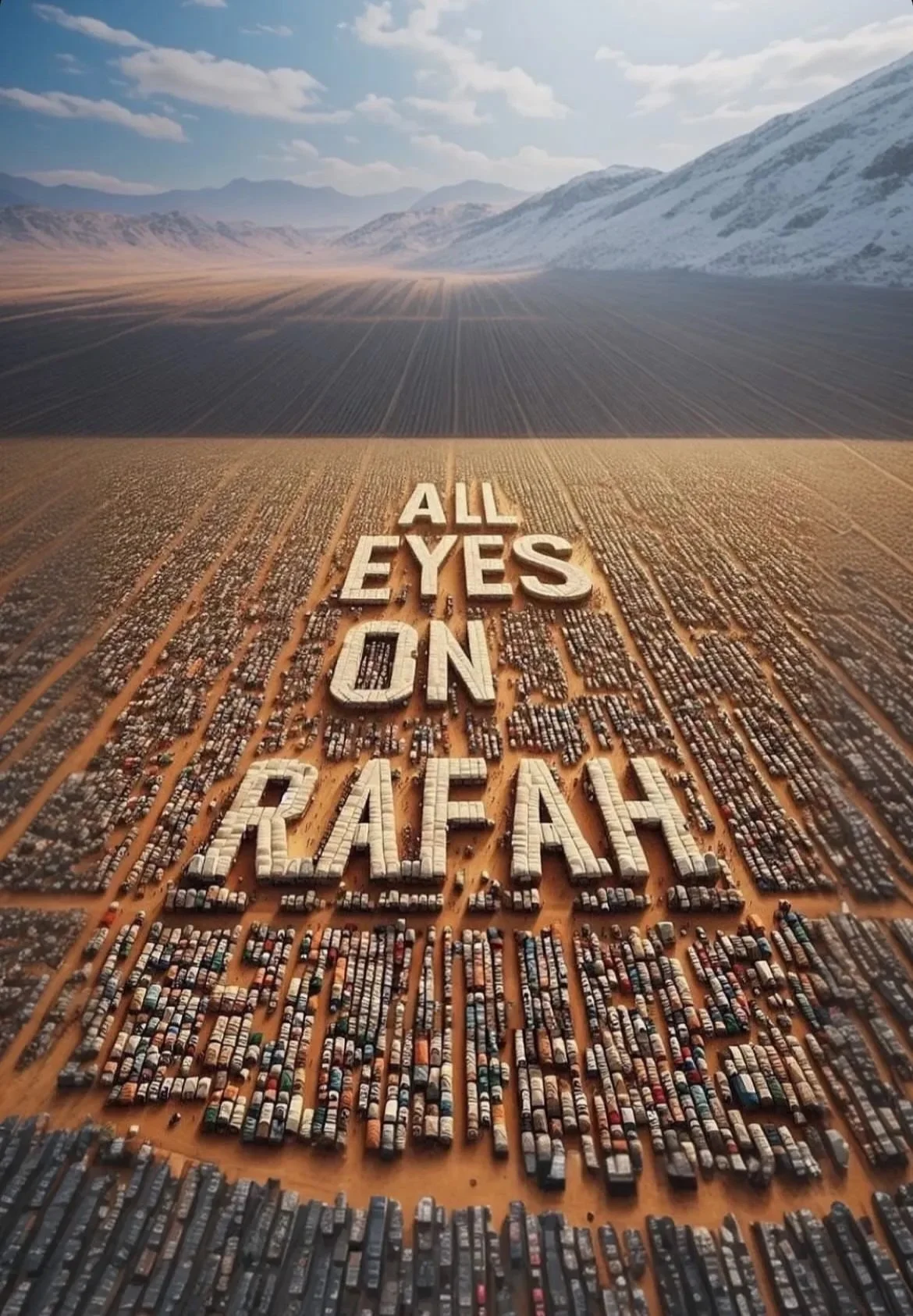
‘All eyes on Rafah’ might be the internet’s most viral AI-generated image. It was shared over 50 million times in the days following an Israeli airstrike that killed at least 45 civilians.
In less than 48 hours almost 45 million people shared an AI‑generated image on Instagram that shows refugee tents arranged to spell out the words ‘All eyes on Rafah’. As I tapped through stories on the platform, the picture appeared in virtually every one I viewed, posted not only by friends but also by celebrities and influencers.
While the message is correct—we should pay attention to Israel’s lethal operations against civilians in Gaza—the irony is obvious: the plea to look at Rafah is smothering genuine photographs and videos from the Strip.
Symbolic, AI-generated pictures of conflict can slip past social media moderation designed to block violent content.
The speed with which the image spread says something about Gaza’s desperate situation, but also about today’s media ecology. Symbolic, AI‑generated images of conflict, like this viral one, can slip past social media moderation designed to block violent content.
Meta, the US technology group that owns Instagram, has recently tightened its rules on political content, loosely defining it as anything concerning ‘laws, elections and social topics’. Users now have to opt in if they wish to see such posts; political material is throttled by default.
Moderation is intended to protect users and keep advertisers happy. Underwear, real estate, pet toys and cosmetics are more difficult to sell alongside images of war.
Because so many people now rely on social platforms for news, these restrictions often shield users from the true horrors of conflict. In the AI picture, neat ranks of tents stretch to the horizon beneath a flawless blue sky, mountains hazy in the distance. Footage from Sunday’s devastating air strike on Rafah presents a different reality: charred corpses, a man carrying a decapitated child, flames tearing through canvas.
Four years ago, social‑media users—again, rightly—protested against racism and police brutality by posting black squares. Critics argued that the gesture drowned out vital discussion within the Black Lives Matter movement. Yesterday I saw fewer authentic images from Gaza on Instagram than in previous days, despite the picture’s aim of focusing all eyes on Rafah.
We can still look, thanks to the journalists risking their lives on the ground. According to the Committee to Protect Journalists (CPJ), at least 107 reporters and media workers have been killed in the Gaza war—more than in any other conflict since the CPJ began keeping records in 1992. Of those killed, 102 were Palestinian. By following journalists such as Hind Khoudary of Al Jazeera, we can witness the real cost of war.
Symbols matter. During the Vietnam war the photograph of Phan Thi Kim Phúc, a young girl running naked and screaming after a napalm attack, crystallised public revulsion and helped turn opinion against the fighting. We do not yet know which image will come to symbolise the Gaza war, but it will not be one generated by AI. There are already too many photographs, each capturing the conflict’s brutal reality.
First published in Kansan Uutiset, 31 May 2024, under the title ‘Miksi tekoälykuva Rafahista levisi miljoonille, mutta todellisuus jää yhä piiloon?’.
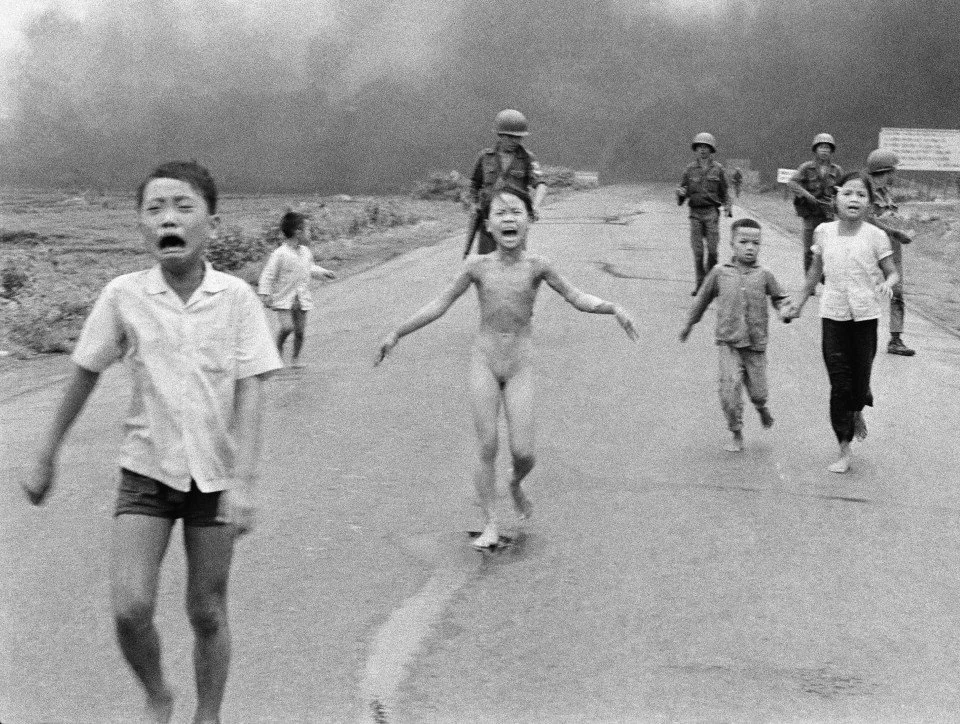
The Pulitzer Prize-winning photograph shows nine-year-old Phan Thi Kim Phúc crying as she runs naked down a road, her body severely burned by napalm. Photo: Nick Ut