Nepal’s social-media ban sparked a bonfire of old grievances
Nepal’s social-media ban lasted barely a day; the fury behind it did not. In a week of gunfire, curfews and arson, at least 72 people died and the government fell.
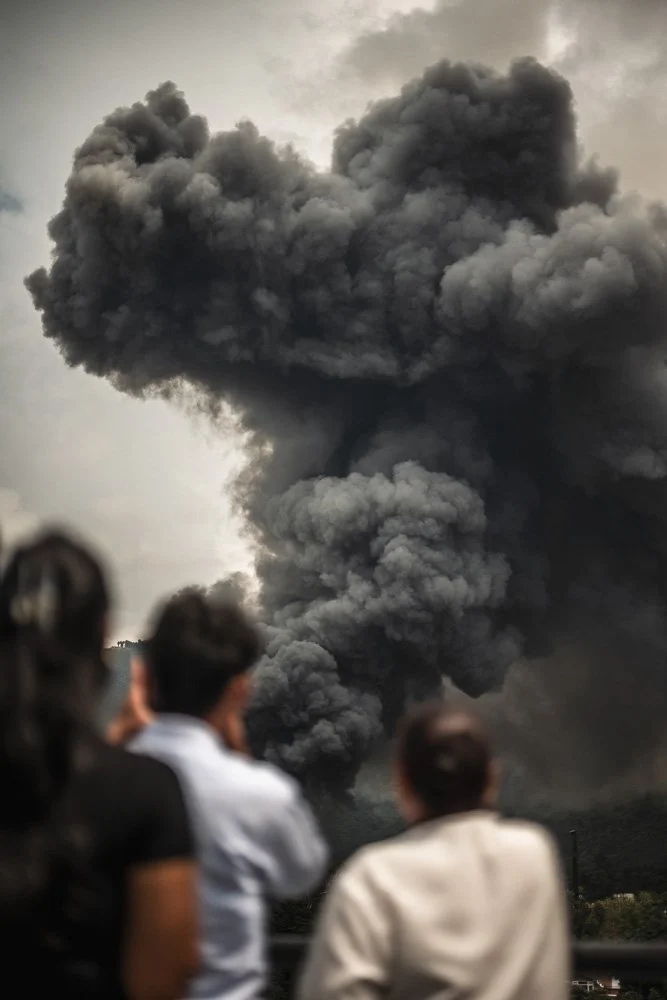
From the hotel roof I watch a column of smoke rise into the sky like a thundercloud. People are still streaming towards the nearby convention centre, set alight minutes earlier. The chants demand that Prime Minister KP Sharma Oli leave the country.
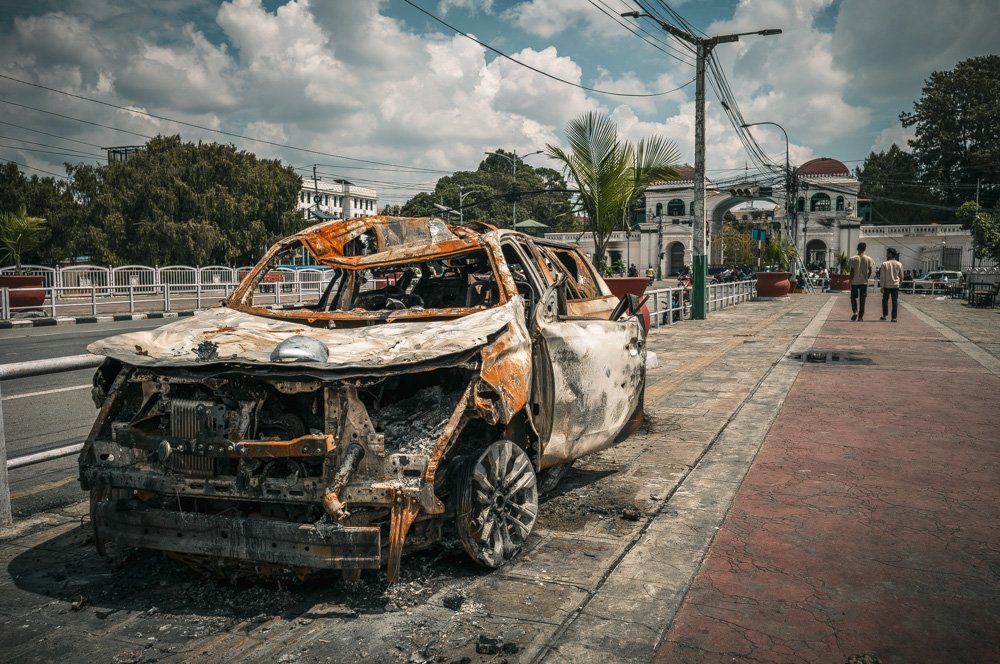
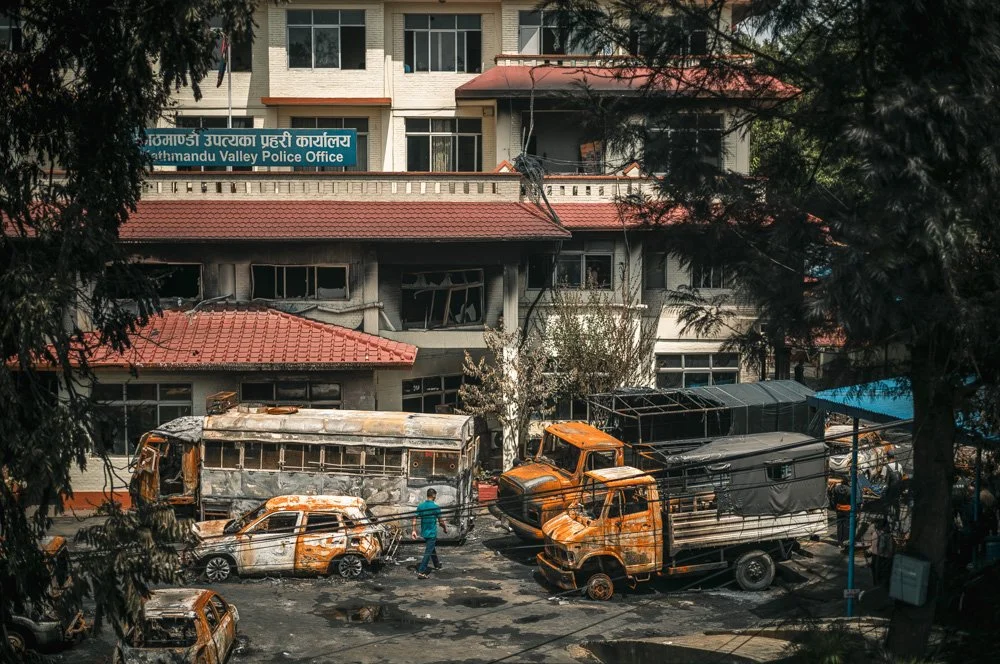
When I turn the other way, the horizon is veiled in smoke hanging over the city. Crowds have set fire to party offices, the homes of senior politicians, police stations and the Parliament building. By afternoon, the police station down the hill is burning too.
A day earlier, on Monday 8 September, riot police on the edge of the government complex fired tear gas and rubber rounds and, once the barricades were breached, live ammunition at the demonstrators.
A protest against the social-media ban and government corruption tipped instantly into chaos, an endless stream of motorbikes rushing the wounded to hospital. By Monday night hospitals were overwhelmed, several people were dead, hundreds injured, troops deployed to the streets and curfews imposed across the country. By week’s end the death toll stood at 72.
Friends told me of parents who had given their teenagers permission to attend. No one imagined it would turn this violent. Arrests, perhaps; batons and tear gas, almost certainly; not people shot dead by police.
Monday did not come out of nowhere. A few days earlier the government had ordered access to dozens of social-media platforms to be blocked because they had not registered in line with official regulations.
Free-speech groups swiftly condemned the ban as arbitrary and an assault on fundamental rights. The US-based Committee to Protect Journalists warned that shutting social media would seriously hamper reporters’ work and the public’s access to information.
For young Nepalis in particular, these platforms are part of the essential infrastructure. A jewellery designer finds customers and sells on Instagram. A would-be entrepreneur learns how to replace a phone screen on YouTube. A mason working in Doha watches his child’s first steps on WhatsApp.
The first headlines cast the unrest as a battle for social-media apps. In truth, the spark fell on a bonfire of long-standing grievances. Young Nepalis’ prospects have been withering for years. The same parties have rotated through office since Nepal became a republic in 2008. Coalitions fall apart before policies have time to take root.
Patronage and old-boy networks decide who lands the lucrative contracts. Meanwhile graduates queue at embassies, because for many the only route to a better life and a decent wage is abroad. Migrant labour and remittances prop up the economy.
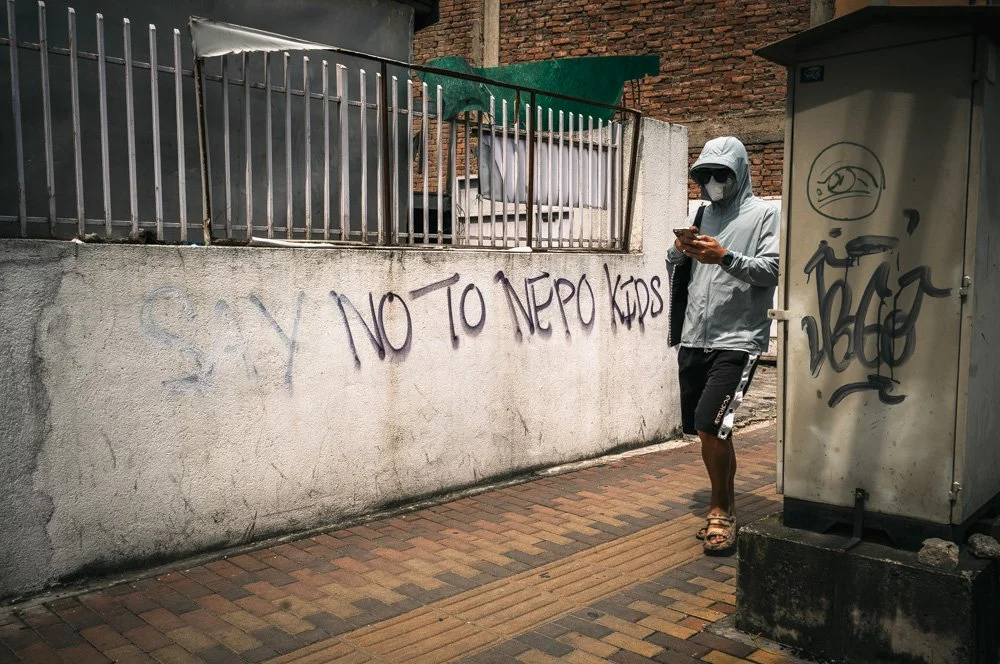
Social media has also held up a mirror to Nepal’s inequality. For months Nepali feeds have filled with images and videos of “nepo babies”, shorthand for nepotism, the unfair preferment of relatives. In practice it has meant the offspring of the political elite, seen cruising in expensive cars, partying on rooftop terraces and showing off designer labels. Social media has made inequality and nepotism visible as never before.
Much like in Nepal, young people in Kenya have been driven by frustration at bleak prospects, a weak economy, tax hikes and poor governance. Protesters have called for President William Ruto to resign. In Bangladesh, students and young workers turned a dispute over civil-service quotas into a broader revolt against dynastic politics.
By Tuesday afternoon the social-media ban had been lifted and Prime Minister KP Sharma Oli had resigned. The human, political and material damage had already been done. At hospital doors families queued to give blood; inside, surgeons treated the wounded.
Although the protest movement was broad and largely peaceful, violent and opportunistic groups also operated in its wake. Anger fixed on symbols. Alongside party headquarters, government offices and police stations, crowds torched five-star hotels seen as emblems of elite privilege — the Hilton and the Hyatt Regency.
Newsrooms were targeted too, including the headquarters of Kantipur Publications, publisher of the country’s most-read papers, and at least one school was set alight.
Amid the chaos, thousands escaped from prisons. Police said more than 13,500 inmates broke out across the country. Within a few days only a few hundred had been recaptured.
Several protest leaders distanced themselves from the acts of destruction, describing them as the work of infiltrators, a line repeated on protesters’ social channels. On the streets, some demonstrators formed human chains to shield potential targets, including the entrance to an army camp.
On Friday, 12 September 2025, Sushila Karki, a former chief justice known for anti-corruption rulings, was sworn in as Nepal’s first female prime minister to lead an interim government. That evening President Ram Chandra Poudel dissolved the House of Representatives and set early elections for 5 March 2026.
Once the curfew eased, I went for a walk. “No to nepo kids,” declares a wall in the city centre. “Revolution is contagious,” answers the wall across the street. Most shops are still shut, and the pavements feel unusually wide in a city that usually moves shoulder to shoulder. Two lost-looking tourists shuffle past. A lone soldier walks the opposite pavement, eyes fixed straight ahead. Now and then a motorbike rattles by, then a couple of army trucks.
Nepal faces two immediate tests. The first is a credible, independent inquiry into the week’s early events. The second, harder one, is to restore young people’s faith in the system and the future by offering real work and education opportunities at home. It does not help that many livelihoods are now at immediate risk. Preliminary estimates suggest the week has left nearly 10,000 people out of work and damage exceeding €18 billion, a sum equal to nearly half the country’s GDP.
First published in Maailman Kuvalehti, 16 September 2025, under the title ‘Somekielto sytytti vanhojen kaunojen rovion Nepalissa’.